Were There Animals Before the Cambrian Explosion?
PALEODEX · 14 September 2026 · 7 min read
For almost a century after Darwin, rock older than the Cambrian seemed to hold no record of animals. Some finds were explained away. Then a leaf-shaped fossil turned up in rock that nobody could call Cambrian.
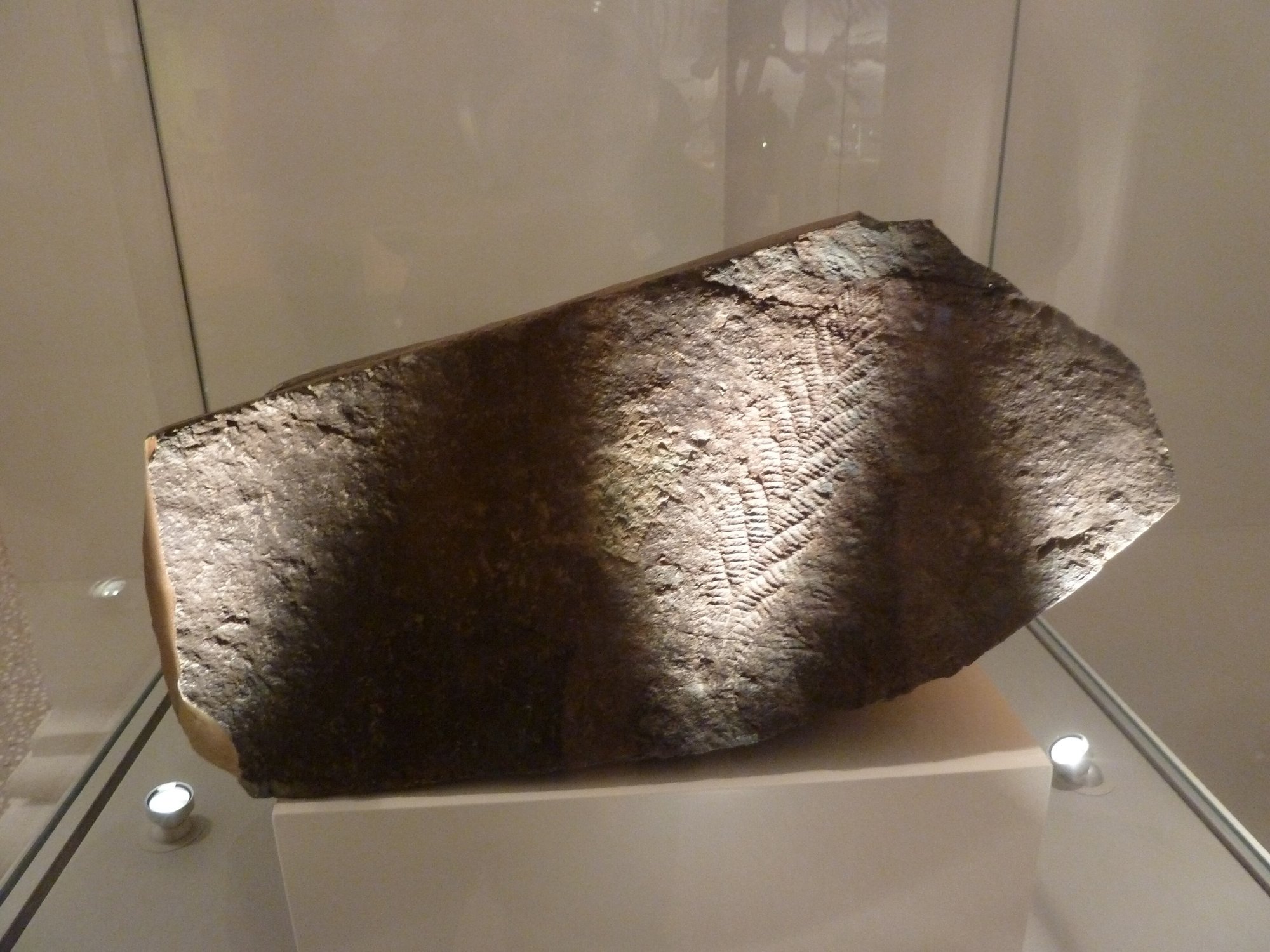
Darwin's missing record
The Cambrian explosion is the stretch of the rock record where animals seem to arrive in force. The University of California Museum of Paleontology's summary puts it plainly: most of the major lineages of animals got their start during the Cambrian Period.
That sudden start troubled Charles Darwin. If his theory was right, life must have had a very long history before the oldest fossil beds then known. In On the Origin of Species (1859) he wrote that during those long ages "the world swarmed with living creatures", and then faced the obvious problem.
He could not say where the record of that life had gone. "To the question why we do not find records of these vast primordial periods," he wrote, "I can give no satisfactory answer." He called the case inexplicable for the present, and conceded that it "may be truly urged as a valid argument" against his views.
One detail matters for what follows. Darwin wrote about the lowest Silurian beds, because in 1859 the oldest fossil-bearing rocks were still filed under that name. They are the rocks now called Cambrian. And Darwin did not think the older rock was truly empty, only that its record was missing.
Finds that were explained away
For almost a century the gap held, though not for want of candidates, and some of them were written off as not being fossils at all.
Take Aspidella, small discs from Newfoundland named in 1872. A 2000 study of the fossil lists what those discs had been taken for over the years: a fossil mollusc or a jellyfish-like "medusoid", but also a gas escape structure, a concretion or a mechanical suction mark. The same study confirmed it as a body fossil: the remains of a real organism, not a quirk of the sediment.
Another candidate, Eozoon, went the other way. It was put forward as a fossil and turned out to be a metamorphic rock.
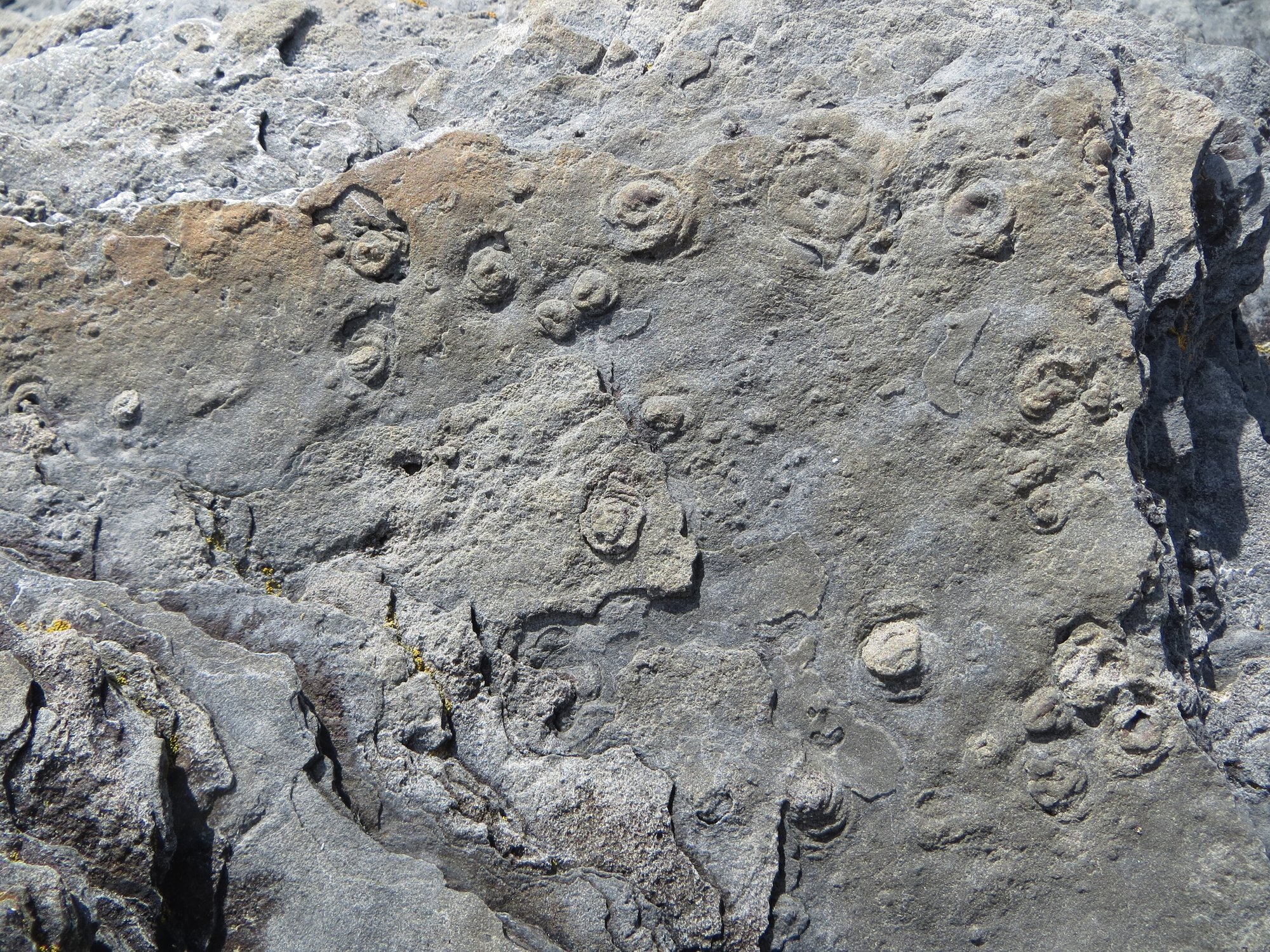
Other finds were accepted as fossils but filed as Cambrian. In 1947, a paper on fossils from the Flinders Ranges of South Australia went out under the title "Early Cambrian (?) jellyfishes". The question mark is in the original. According to the International Union of Geological Sciences' geoheritage record of that collection, fossils of animals were then considered not to occur in rocks older than the Cambrian, and the fossils' late Precambrian age was not recognised until the late 1950s.
Charnwood Forest, 1958
The fossil that could not be explained away came from England. In 1958 the geologist T. D. Ford described two new fossils from the Precambrian rocks of Charnwood Forest, in Leicestershire, and named them Charnia masoni and Charniodiscus concentricus.
Charnia is shaped like a leaf or a frond. Ford, for the record, thought the evidence pointed to algae. What made his fossils hard to argue with was not what they were but where they were. Charnwood Forest's rocks had long been recognised as Precambrian, and British geology had been studied closely enough that nobody could quietly move them into the Cambrian, which had been the usual way out. The Charnwood Forest Geopark goes further: those rocks had been thought too old to contain fossils.
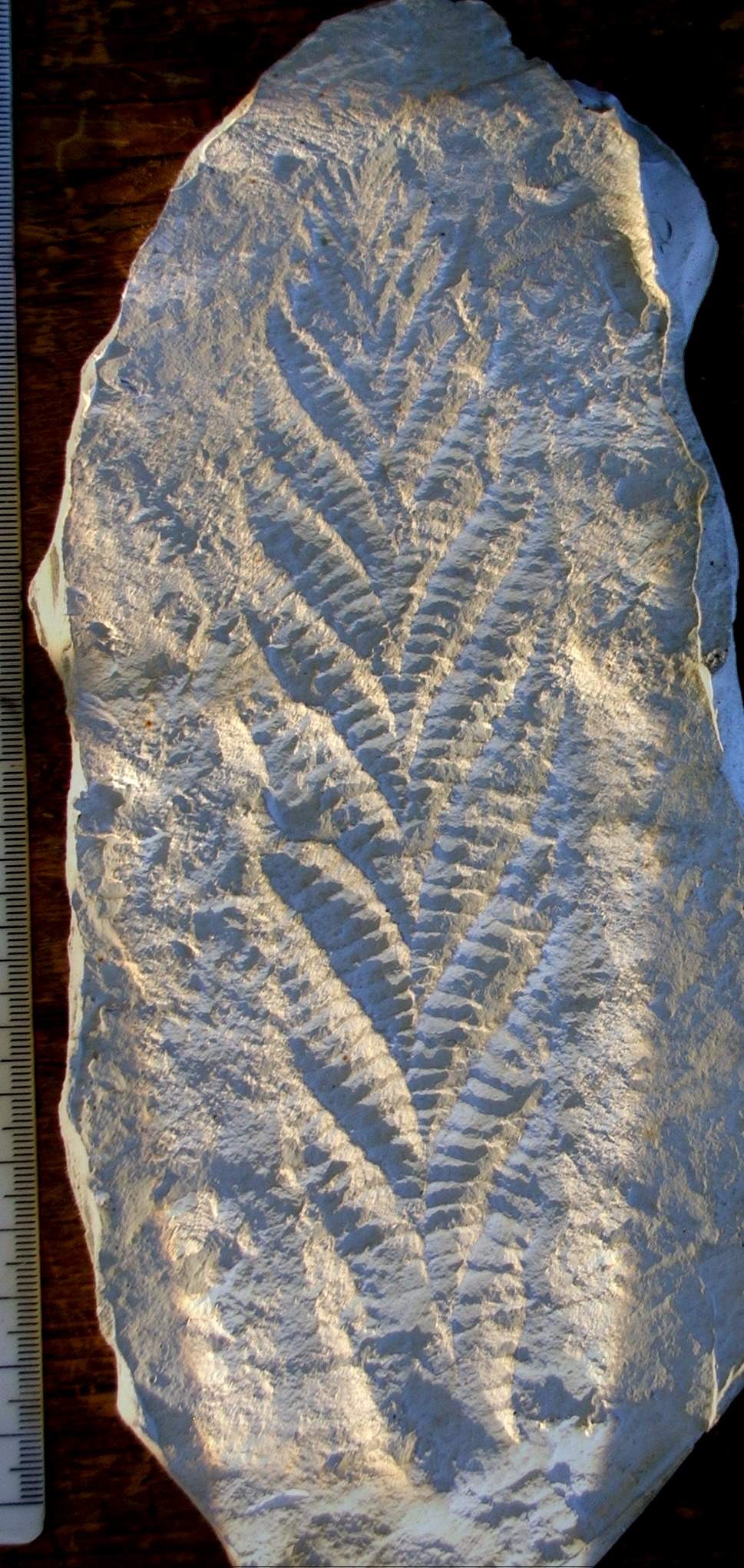
The Charnwood fossil beds have since been dated. A 2015 study put the rocks that hold the Charnia holotype at 561.9 million years old and younger, which the Geopark rounds to about 560 million years. The base of the Cambrian sits at 538.8 million years on the international chart.
Not just one fossil
Within a year, the Charnwood find had company. In a short paper in Nature in May 1959, M. F. Glaessner reported new evidence that the Ediacara fauna of South Australia was Late Precambrian. He matched some of its members to genera described from the Nama rocks of southern Africa, and noted that a genus recently described from Charnwood Forest also occurs at Ediacara.
His title named three places: Precambrian Coelenterata from Australia, Africa and England. Coelenterata was the old grouping for jellyfish, corals and their relatives, so Glaessner read these fossils as animals. He also argued that some of them were entirely new kinds of soft-bodied invertebrate.
Their size is part of why this mattered. Charnia specimens from Charnwood run from about 3 centimetres to more than 45 centimetres long, and the largest Charnia masoni described is over 65 centimetres.
So what were they?
This is the part that is still argued, and it is worth being careful with.
The Ediacaran organisms, as a group, have been hard to place from the start. Adolf Seilacher argued that they formed a group of their own, the Vendozoa or Vendobionta, separate from animals. A 2022 paper in Geological Magazine calls them "frustratingly difficult" to characterise and classify, and notes that even long-established members are still hard to fit onto the tree of life.
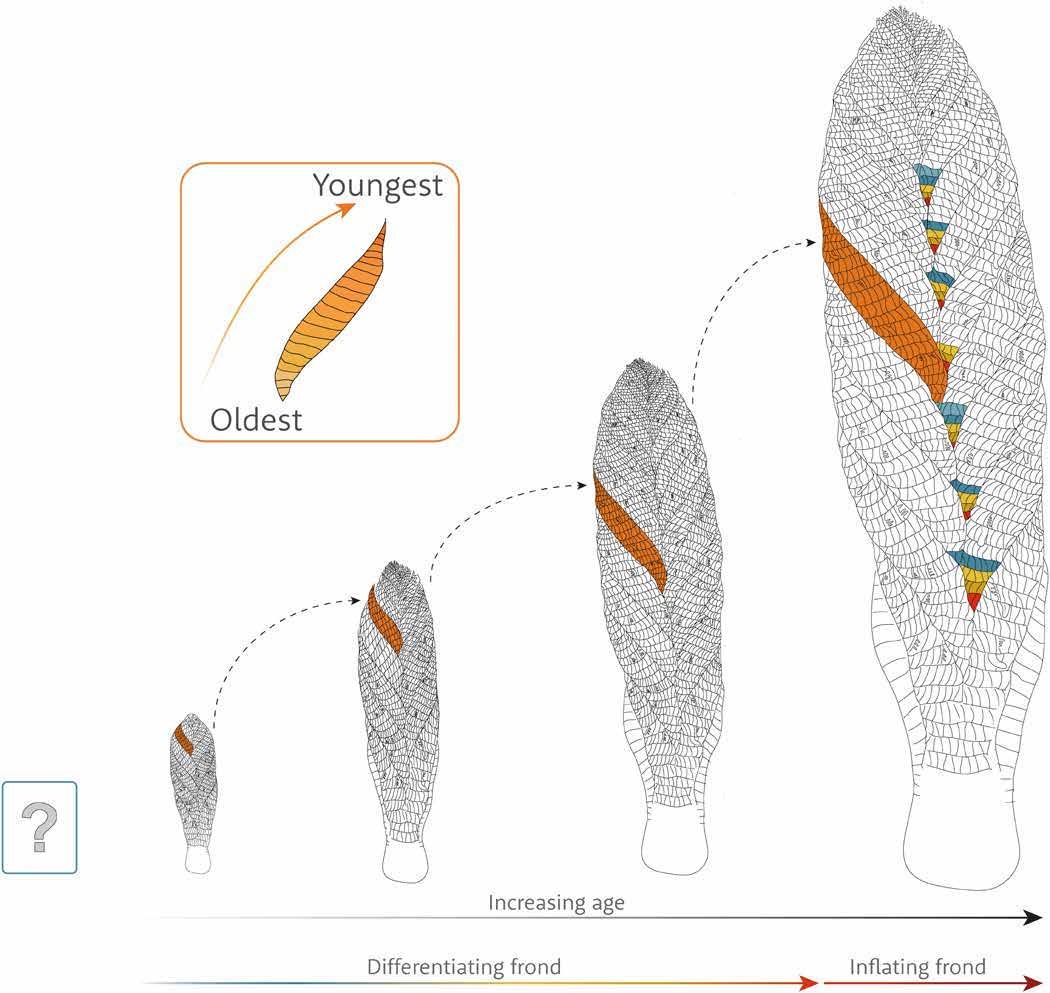
For Charnia itself there is a much firmer answer. In 2021, Frances Dunn and colleagues studied how Charnia grew and concluded that it was an early animal: in their terms a stem-eumetazoan, an early offshoot of the animal family tree, with "a bodyplan unlike anything alive today". Their result let them reject several earlier readings, including the ideas that these fronds were a separate group, a fungus or a single-celled protist.
The same research group wrote in 2025 that rangeomorphs, the frond-shaped group Charnia belongs to, are increasingly interpreted as early members of the animal lineage, while their relationships to one another remain contentious. Because it is the same group, that tells you which way the field is leaning, not that the question has been settled independently.
Why this belongs in PaleoDex
Because the rule Charnia broke was never "there was no life before the Cambrian". It was narrower than that, and more interesting: nobody had an accepted animal fossil from older rock, and the finds that might have been one were explained away one way or another. Charnia ended that by turning up where the usual explanations could not reach. It pairs well with Hallucigenia, reconstructed upside down, from the Cambrian side of the line, and with oxygen, a poison before it was an atmosphere, from much deeper in the Precambrian. For Darwin's side of the story, see the fossil that arrived right on cue. For the wider catalogue, see the Fossil Dex, and for how we handle sourcing, about the data.
Sources
Every claim above traces to the sources below. Where we read only an abstract or a summary, we say so.
- Darwin, C. (1859). On the Origin of Species, 1st edition, chapter IX, "On the Imperfection of the Geological Record". Project Gutenberg. Source for the missing record, the quotations and the lowest Silurian beds.
- University of California Museum of Paleontology, Understanding Evolution, "The Cambrian explosion". Source for most major animal lineages starting in the Cambrian.
- Gehling, J.G., Narbonne, G.M. & Anderson, M.M. (2000). "The first named Ediacaran body fossil, Aspidella terranovica." Palaeontology 43(3): 427–456. DOI. Source for the 1872 name, the earlier interpretations and the confirmation as a body fossil. Read as the abstract.
- Holtz, University of Maryland, GEOL 204 course notes. Source for Eozoon, the point about British geology, and Seilacher's Vendozoa or Vendobionta.
- Sprigg, R.C. (1947). "Early Cambrian (?) jellyfishes from the Flinders Ranges, South Australia." Transactions of the Royal Society of South Australia 71(2): 212–224. Cited for its title.
- International Union of Geological Sciences, Geoheritage, "Sprigg Ediacaran Fossil Collection". Source for the view that animal fossils did not occur below the Cambrian, and for the late-1950s recognition of the Ediacara fossils' age.
- Ford, T.D. (1958). "Pre-Cambrian fossils from Charnwood Forest." Proceedings of the Yorkshire Geological Society 31(3): 211–217. DOI. Source for the naming of Charnia masoni and Charniodiscus concentricus, and for Ford's reading of them as algae. Read as the published summary.
- Charnwood Forest Geopark, "Discovering Charnia". Source for the rocks' long recognition as Precambrian, the belief that they were too old for fossils, and the rounded age of about 560 million years.
- Glaessner, M.F. (1959). "Precambrian Coelenterata from Australia, Africa and England." Nature 183: 1472–1473. Source for the Late Precambrian age of the Ediacara fauna, the southern African genera, the Charnwood genus at Ediacara and the new soft-bodied invertebrates. Opening paragraph read.
- Noble, S.R., Condon, D.J., Carney, J.N., Wilby, P.R., Pharaoh, T.C. & Ford, T.D. (2015). GSA Bulletin 127(1–2): 250–265. DOI. Source for the 561.9 million-year date. Read as the abstract.
- International Commission on Stratigraphy, International Chronostratigraphic Chart. Source for the base of the Cambrian at 538.8 million years.
- Runnegar, B. (2022). "Following the logic behind biological interpretations of the Ediacaran biotas." Geological Magazine 159(7): 1093–1117. DOI. Source for how hard these organisms are to classify.
- Dunn, F.S., Liu, A.G., Grazhdankin, D.V., Vixseboxse, P., Flannery-Sutherland, J., Green, E., Harris, S., Wilby, P.R. & Donoghue, P.C.J. (2021). "The developmental biology of Charnia and the eumetazoan affinity of the Ediacaran rangeomorphs." Science Advances 7(30): eabe0291. DOI. Source for how Charnia grew, its placement, the specimen sizes, the rejected alternatives and the emerging consensus.
- Dunn, F.S., Donoghue, P.C.J. & Liu, A.G. (2025). "Morphogenesis of Fractofusus andersoni and the nature of early animal development." Nature Communications 16: 3439. DOI. Source for which way the field is leaning. Same research group as the 2021 study.
The real record, in your pocket.
PaleoDex catalogues the real fossil record, and every fact in it is sourced. Get the app.
GET IT ON GOOGLE PLAY →