Does ancient DNA only survive in the cold?
PALEODEX · 24 August 2026 · 5 min read
Every famous ancient-DNA story is set in permafrost. A 2026 survey of six South African caves just recovered DNA from a roughly 50,000-year-old antelope tooth — and quietly retired an assumption.
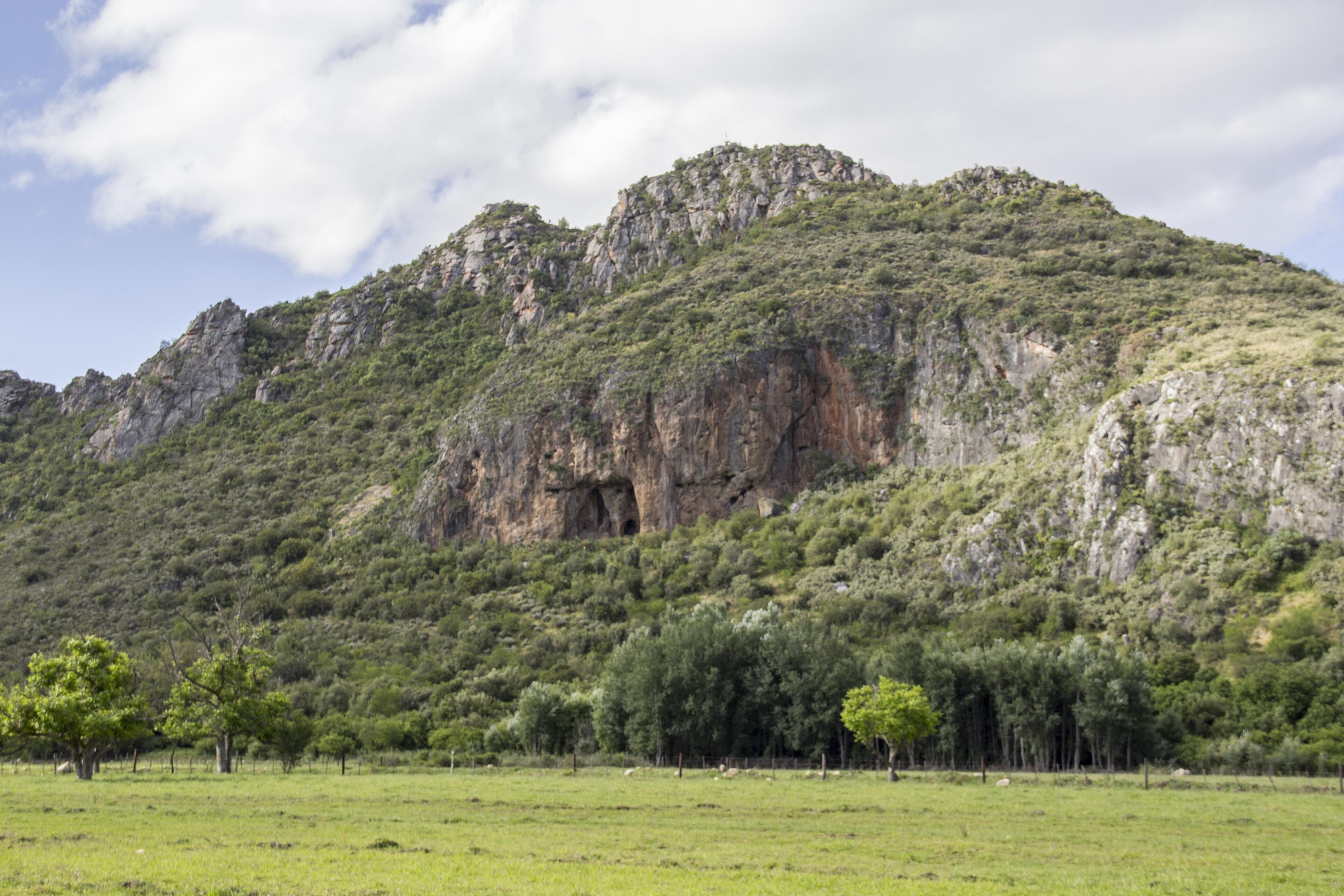
Ask anyone to name an ancient-DNA discovery and they will hand you a cold one. Mammoth genomes out of the Arctic. Neanderthals and Denisovans out of a cave in Siberia. The logic behind that pattern is real: DNA breaks down over time, cold slows the clock, and so the field went looking where the clock runs slowest. But a study published in 2026 just showed that one of the conclusions drawn from that logic — that warm regions have essentially nothing to offer — was an assumption, not a measurement.
The frozen canon, and the map it left blank
Because the famous finds kept coming from permafrost and cold caves, warm regions were long written off as hostile to ancient-DNA preservation — and few places paid a higher price for that than sub-Saharan Africa. The region where so much of the deep human and animal story played out had almost no ancient-DNA record of its own. Researchers mostly didn't fail there; following the map, they mostly didn't try. The result: the genetics of an entire continent's Ice Age fauna stayed close to blank, the same way the genomes of the last mammoths would have stayed blank if nobody had drilled into Arctic bone.
The study: six caves, 320 fossils
The paper that tested the assumption is de Jager et al. 2026, published online in May in Quaternary Science Reviews, led from the Globe Institute at the University of Copenhagen. The team went to six cave and rock-shelter sites in southern South Africa, all tied to the Palaeo-Agulhas Plain: Boomplaas Cave, Byneskranskop 1, Die Kelders Cave 1, Elands Bay Cave, Klasies River Mouth, and Nelson Bay Cave. From those sites they assembled 320 fossil teeth and bones from six wild bovid species — antelope and buffalo relatives — spanning roughly 110,000 years. Then they systematically screened the material for two kinds of molecular survivor: ancient DNA and collagen, the main structural protein in bone.
The numbers: 45% of what they screened
Of the 144 specimens screened for ancient DNA, 65 yielded it — a 45% success rate. Collagen survived in 35%. To be precise about what that number is: it's a within-sample rate at these six sites, not a general figure for warm regions everywhere. But for a region written off as a preservation dead zone, nearly half is not a rounding error. Method mattered too: a single-stranded DNA extraction technique recovered up to 6.7 times as much animal DNA as the standard double-stranded approach — a reminder that part of "DNA doesn't survive there" was really "our tools weren't looking hard enough."
The record: a reedbuck molar at roughly 50,000 years
Most of the successful samples were Holocene, but four reached back into the Late Pleistocene, between roughly 50,000 and 12,000 years old: three teeth from the extinct long-horned buffalo, and one partial molar of a mountain reedbuck (Redunca fulvorufula) from Boomplaas Cave at roughly 50,000 years — the oldest ancient DNA yet reported from sub-Saharan Africa. The scale of that jump is best seen against the previous records: the oldest animal DNA from the region was a blue antelope (Hippotragus leucophaeus) palaeogenome from a tooth dated 9,800–9,300 years before present (Hempel et al. 2022), and the oldest human DNA about 18,000 years, from Mlambalasi rock shelter in Tanzania (Lipson et al. 2022).
And here is the part we like best: the lead author is the record's most careful critic. "The 50,000-year-old DNA is exciting, but I am myself skeptical of it for two reasons," de Jager has said publicly — the sample is an age outlier compared with everything else in the study, and it carried human contamination, which was removed in the analysis. That hedge isn't a footnote; it's how the record should be read.
What changes — and what doesn't
What doesn't change: cold is still the best preservative ancient DNA has, and temperature remains one of the strongest predictors of whether it survives. Nobody should read this study as "heat is fine." What changes is the map. A warm region preserved far more than the field assumed — reaching roughly 50,000 years at one site — and the team's own takeaway is the practical one: "We show that paleogenetic studies on fauna at lower latitudes are possible," with Holocene-age specimens offering the best odds. As for how far back the warm-climate record can go, de Jager is equally direct: "There is of course a limit to DNA preservation in Africa, but what it is, is not clear."
We have a soft spot for results like this, because assumptions about preservation have burned science in both directions — amber promised DNA it couldn't deliver, and South Africa's caves were delivering DNA nobody asked for. The fix in both cases was the same: test the material instead of trusting the story. That's the standard the whole fossil record deserves, and the one we hold the PaleoDex catalogue to — every entry sourced, and every blank left blank until the evidence fills it.
Sources
Sourced, not assumed — the paper and its context below.
- de Jager et al. 2026 — "Evaluation of DNA and collagen preservation in Late Pleistocene and Holocene bovid fossils from South Africa" — Quaternary Science Reviews 388: 110076
- Scientists recover sub-Saharan Africa's oldest ancient animal DNA — phys.org
- Hempel et al. 2022 — the blue antelope palaeogenome — Molecular Biology and Evolution
- Lipson et al. 2022 — Ancient DNA and deep population structure in sub-Saharan African foragers — Nature
The real record, in your pocket.
PaleoDex catalogues the real fossil record, and every fact in it is sourced. Get the app.
GET IT ON GOOGLE PLAY →