How Do We Know What Colour a Moa Was?
PALEODEX · 19 September 2026 · 7 min read
No photograph of a moa exists, and none ever could. The colour of its plumage is still not a guess.
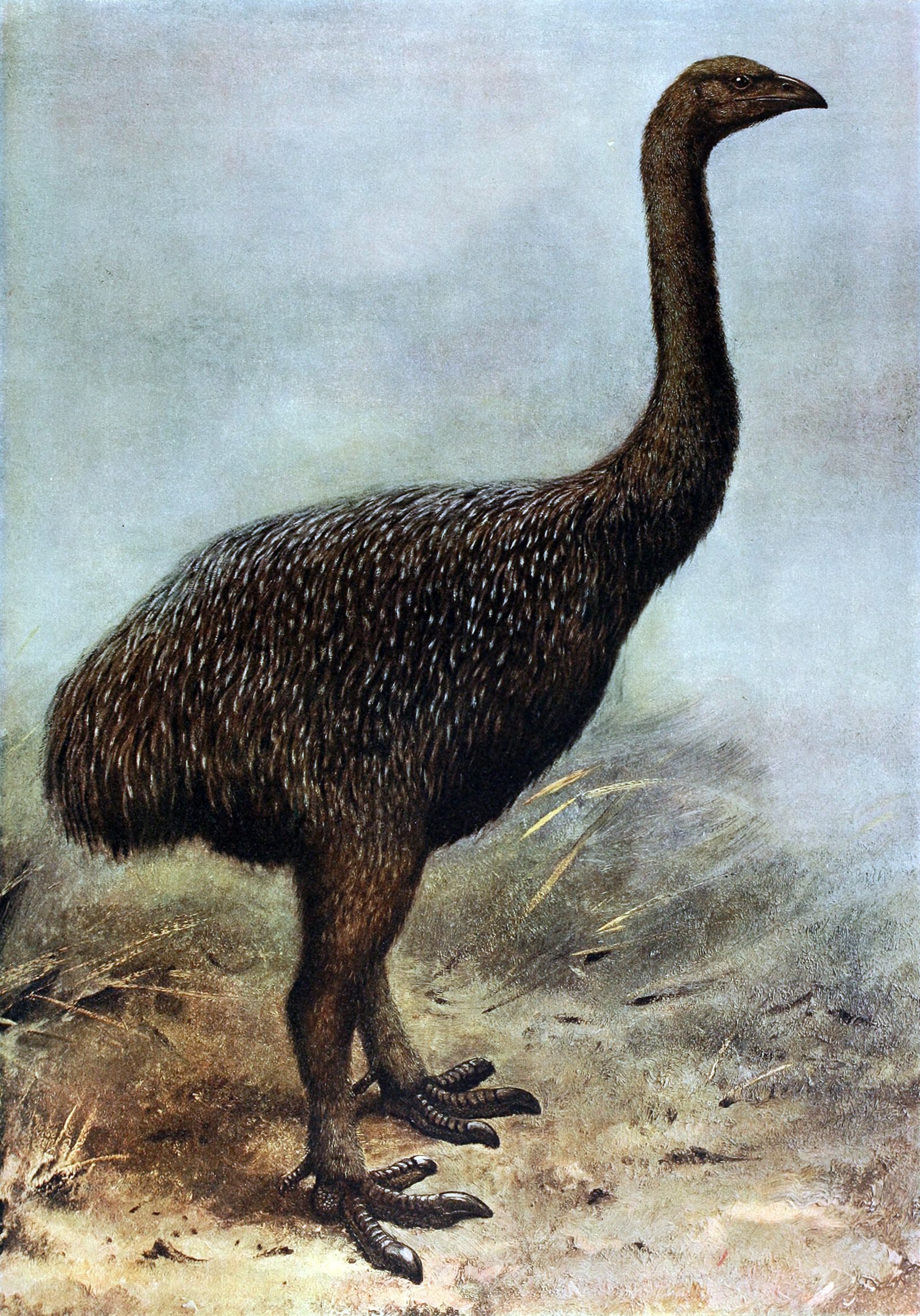
Colour is usually the first thing the fossil record loses and the last thing it gives back. For most extinct animals, the colour you see in a museum mural is a painter's decision. For four species of moa, it is a measurement — and the reason is almost disappointingly simple. The feathers are still feathers.
No photograph, and no witness
New Zealand's moa were gone by about 1445 CE. That is roughly two centuries before Abel Tasman sighted the country in 1642, and about four hundred years before Louis Daguerre published a workable photographic process in 1839. Nineteenth-century sighting reports exist and none of them holds up; the settled position is that moa survival past the fifteenth century is extremely unlikely. So no European ever saw a living moa, nobody ever photographed one, and every picture of a moa on its feet — including the one at the top of this page — is somebody's reconstruction.
What a dry rock shelter keeps
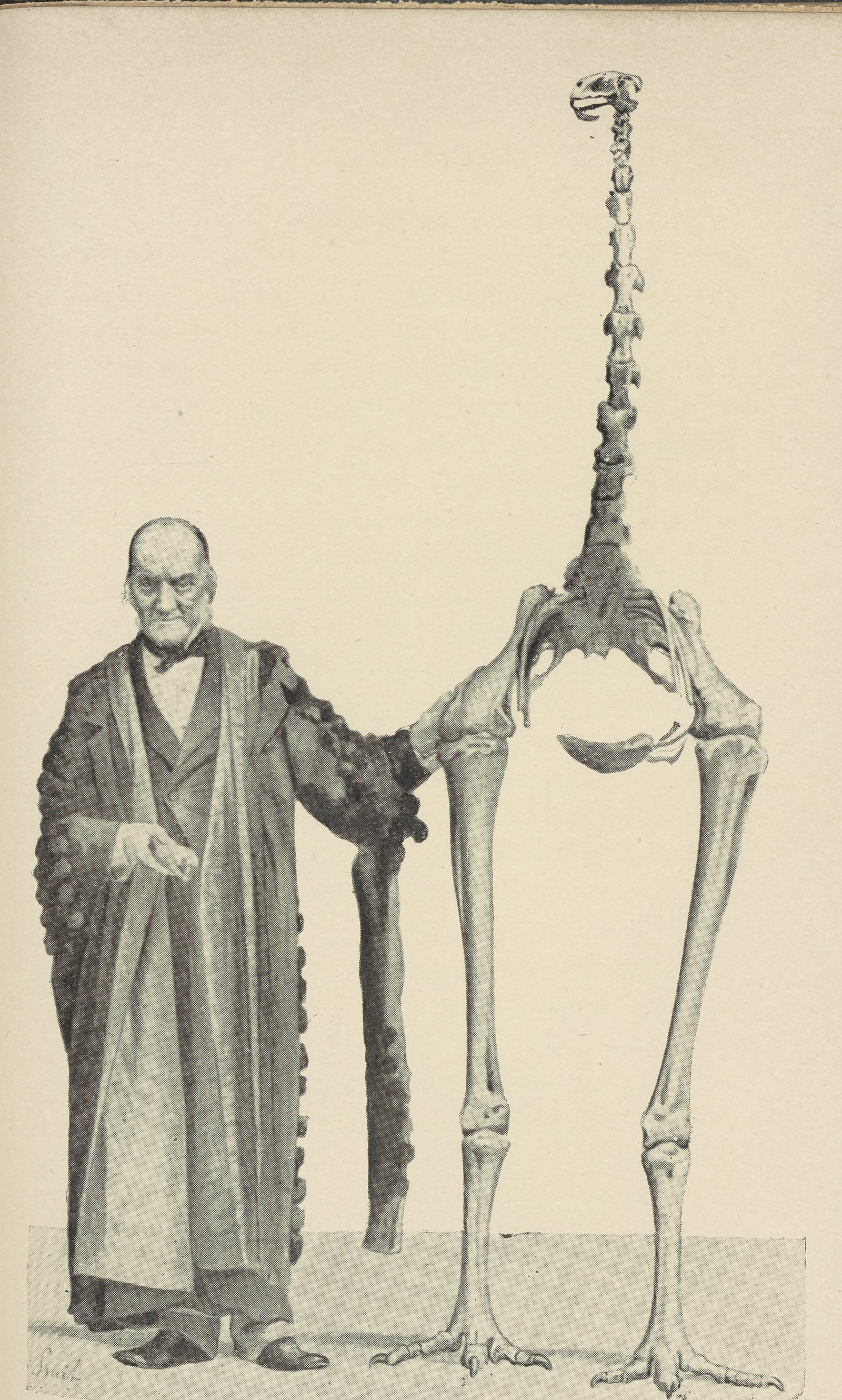
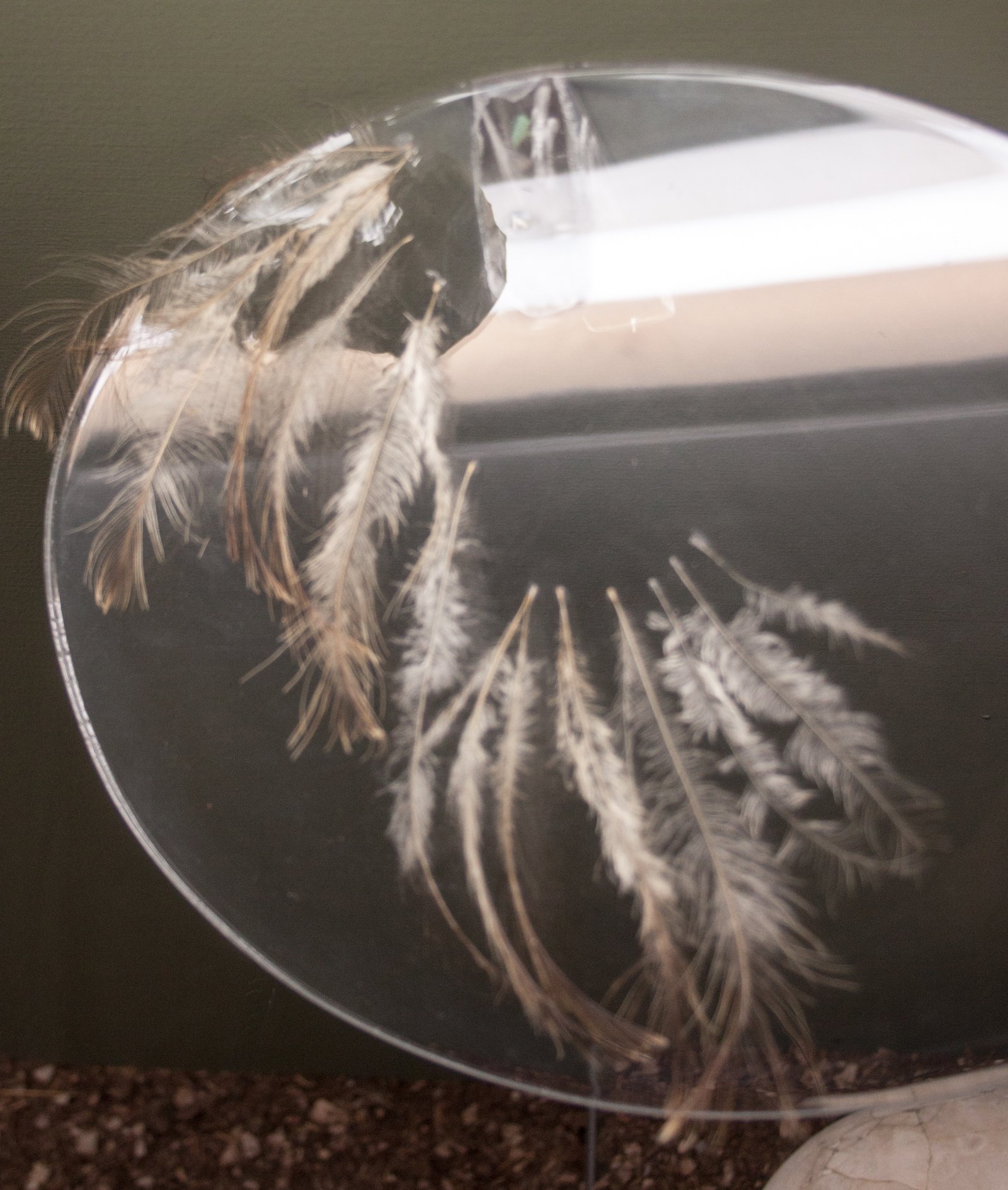
Central Otago, in New Zealand's South Island, is dry. Dry enough that rock shelters there hold loose moa feathers — not carbonised films, not mineral impressions in stone, but actual keratinous feathers that were shed on a shelter floor and then simply left alone. In 2009 Nicolas Rawlence, Jamie Wood, Kyle Armstrong and Alan Cooper published a study of nineteen of them, excavated from three shelters: Sawers', Roxburgh Gorge B and Roxburgh Gorge C.
That the feathers never mineralised is the whole reason this story exists. Mineralisation replaces the original material. Here nothing was replaced, so the keratin survived — and so, inside it, did the pigment. Dryness did all of it. If you have read our piece on how ancient DNA does not only survive in the cold, this is the same principle doing a different job.
Why ancient DNA is in this story at all
Here is the step that is easy to skip. A loose feather lying on a shelter floor cannot be assigned to a species by eye. It is a feather. It does not come labelled, and the two feather types described in this study cut across species rather than identifying them. Without a species, "moa feather" is as far as you get, and a colour with no bird attached to it is not worth much.
So the DNA is not in this work to reconstruct anything. It is there to answer whose feather is this — and that is also where the methodological advance sits. Extraction protocols had generally ignored the distal parts of a feather, the rachis and the barbs, because it was assumed there was no amplifiable DNA in them; the base of the quill, the calamus, was treated as the only usable source. That is an awkward assumption in a subfossil deposit, where the upper shaft and the vane are often exactly what survives. Rawlence and colleagues got DNA out of the shaft and the barbs, and used it to assign feathers to four species: upland moa (Megalapteryx didinus), South Island giant moa (Dinornis robustus), stout-legged moa (Euryapteryx gravis) and heavy-footed moa (Pachyornis elephantopus).
The colour needed no inference
This is worth separating carefully from the fossil-feather colour research that is better known. In that work — the kind applied to Archaeopteryx — colour is inferred from the shape and arrangement of preserved melanosomes in a compressed fossil, and the inference is genuinely argued over.
Nothing like that happens here. The pigment is still in the feather, so the colour is measured rather than modelled. The study describes two feather types. The first is "tan to light brown at the base, grading into dark brown to black at the tip", which produces plain, slightly streaky plumage. The second is "dark brown to black for the basal two-thirds and white at the tip", which produces a speckled pattern. As Rawlence put it at the time, "while many of the species had a similar, relatively plain brown plumage for camouflage, some had white-tipped feathers to create a speckled appearance".
But had it faded?
That is the obvious objection, and the answer to it is the best part of the paper. Old feathers in a museum drawer do fade. If these had, the colour read off them would be the colour of an artefact rather than of a bird.
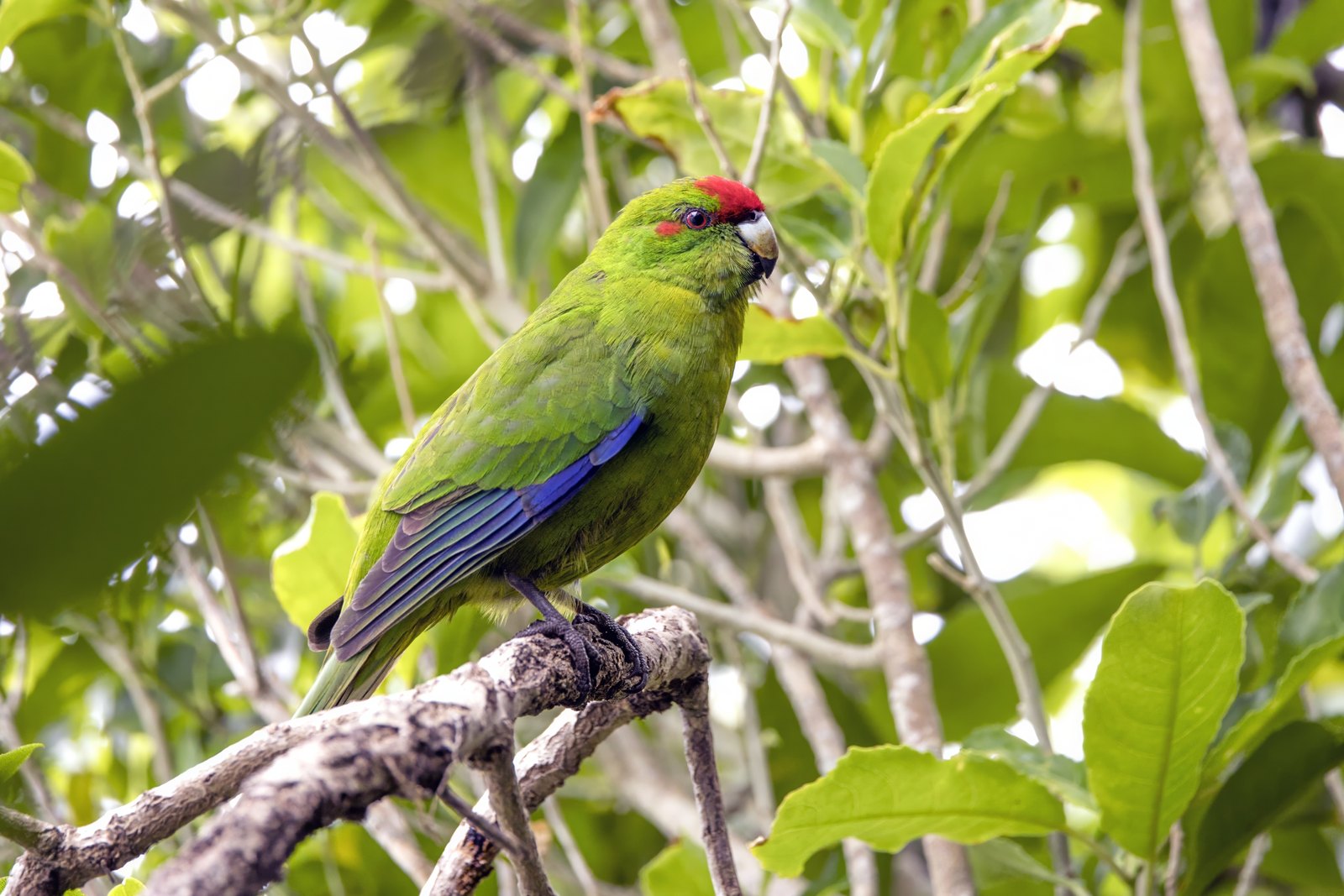
The team had a control sitting in the same sediment. Red-crowned parakeets are still alive in New Zealand, and subfossil red-crowned parakeet feathers had been excavated from the moa-feather-bearing layers inside Roxburgh Gorge C. So the question became answerable: take a bird whose living colour you can walk outside and check, and compare its old feathers with its new ones.
They did it properly. Old and recent feathers were photographed on a white background with a fixed camera setting, at a standard distance of 300 mm and a focal length of 35 mm, with fluorescent lighting 300 mm above them. Three Munsell colour chips were laid beside every photograph, their red, green and blue values read off the image and regressed against the chips' known values, so the comparison was calibrated rather than eyeballed. The result: the colour of the subfossil parakeet feathers "reflected accurately that of the modern feathers", and any fading was minor.
One number to be careful with
You will often see these feathers described as at least 2,500 years old, or 2,000 to 3,000 years old. That figure is not in the paper. Rawlence and colleagues give no radiocarbon date for any of the nineteen feathers they analysed, and describe the deposits only as Late Holocene. The number comes from the authors' press interviews in 2009. It may well be about right. It is simply worth knowing which claims are published and which are a scientist talking to a journalist — a distinction we try to keep visible in how we handle sourcing.
What the study does not claim
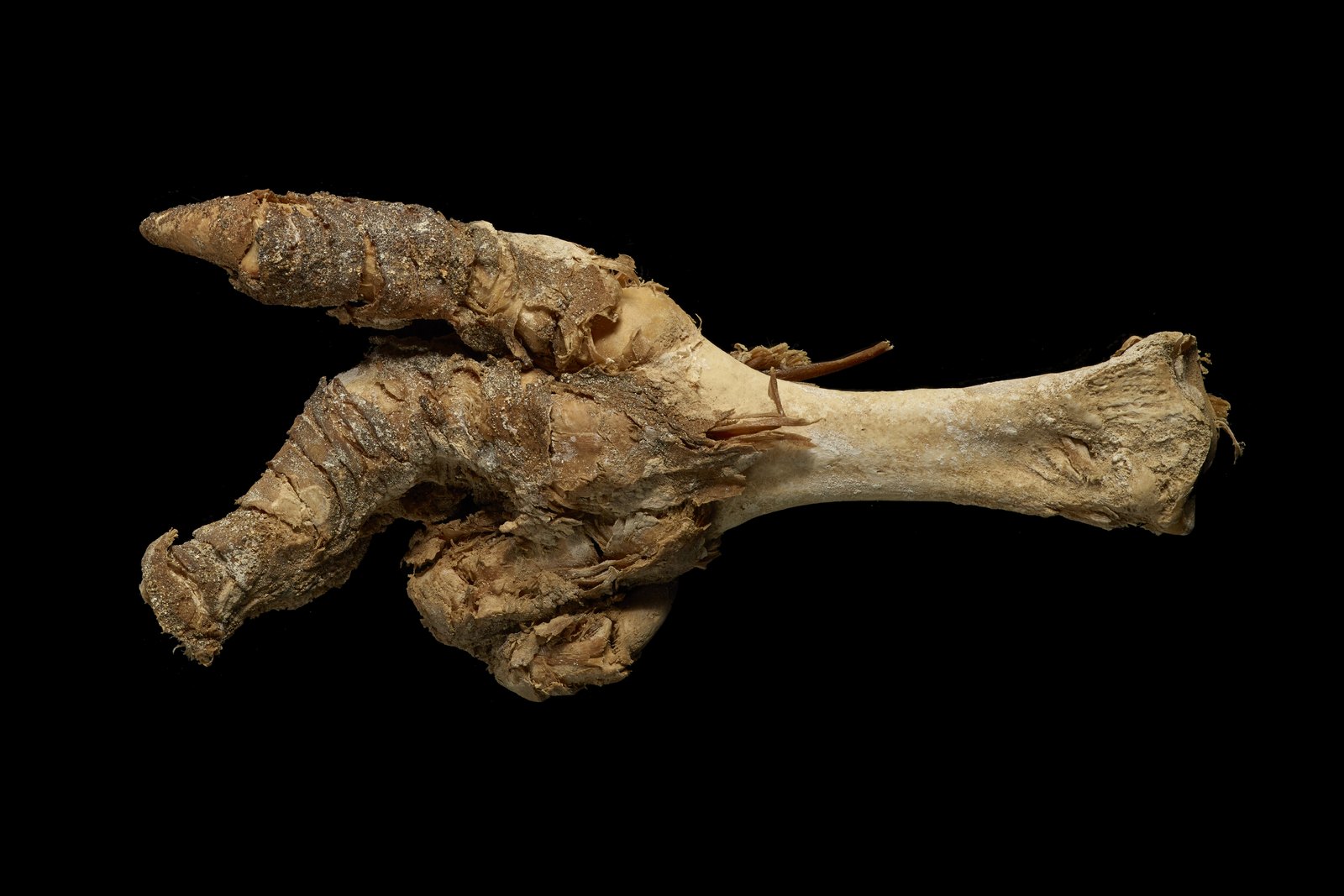
One result is easy to overstate, so here it is carefully. The speckled, white-tipped pattern had previously been known only from the upland moa, on feathers still attached in situ to mummified remains — which remains the most secure attribution of plumage to species anyone has. The 2009 results suggest that speckled patterning "may have been present in both the heavy-footed and upland moa". Nothing was taken away from the upland moa and nothing was reassigned. A pattern that was known from one species may turn out to be shared with another, which is a smaller and more honest claim than it is usually reported as.
Why this belongs in PaleoDex
Because "how do we know?" usually has a more interesting answer than the fact itself. The colour of a moa is not a triumph of modelling. It is what happens when a feather lands somewhere dry and nobody disturbs it for a very long time, plus enough DNA to say which bird dropped it, plus a parrot that was kind enough to still exist. The rest of the catalogue, sourced the same way, is in the Fossil Dex.
Sources
Every claim above traces to the sources below. Where we relied on someone else's reading of a source, we say so.
- Rawlence, N.J., Wood, J.R., Armstrong, K.N. & Cooper, A. (2009). "DNA content and distribution in ancient feathers and potential to reconstruct the plumage of extinct avian taxa." Proceedings of the Royal Society B 276(1672): 3395–3402. DOI. Read in full. Source for the nineteen feathers, the three shelters, the rachis-and-barbs extraction, the four species, both feather types, the parakeet control and its method, and the "may have been present in both" wording.
- Perry, G.L.W., Wheeler, A.B., Wood, J.R. & Wilmshurst, J.M. (2014). "A high-precision chronology for the rapid extinction of New Zealand moa (Aves, Dinornithiformes)." Quaternary Science Reviews 105: 126–135. DOI. Source for the date by which moa were gone. Used at abstract and summary level.
- University of Adelaide / Landcare Research press release, 30 June 2009, as carried by ScienceDaily. Link. Source for Rawlence's quoted description of the plumage, and — this is the point of citing it — for the feather-age figure that is not in the paper.
- New Zealand Birds Online, species account for the upland moa. Link. Source for the mummified remains and the two plumage types described from them.
The real record, in your pocket.
PaleoDex catalogues the real fossil record, and every fact in it is sourced. Get the app.
GET IT ON GOOGLE PLAY →