Homo Erectus Lasted Almost Two Million Years. We've Managed 300,000.
PALEODEX · 6 September 2026 · 8 min read
We tend to assume modern humans are the long success story of evolution. We're not even close. One other human species ran for close to six times longer than we've managed so far, and the fossil record can put dates on both ends of its run.
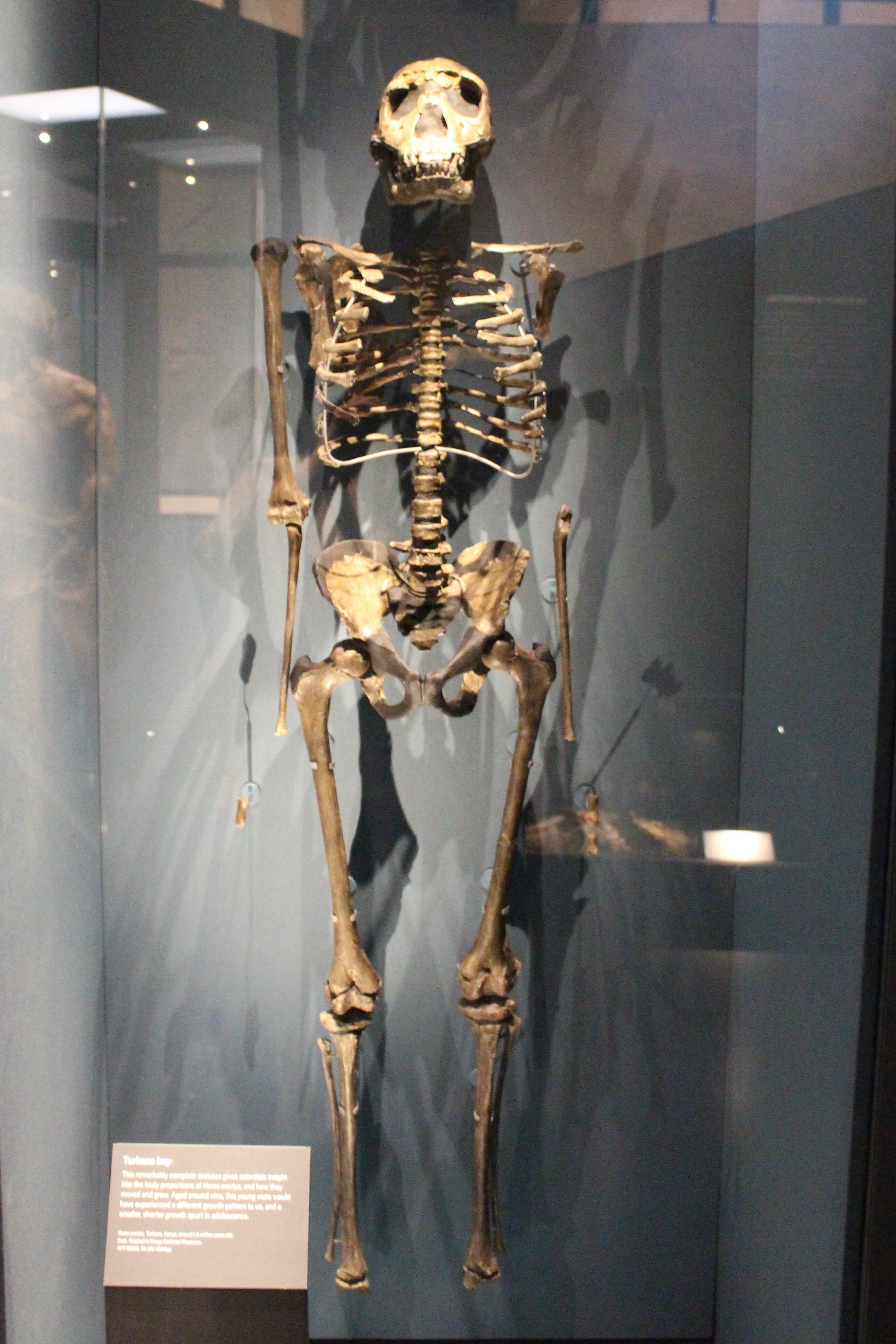
Ask most people which human species has lasted the longest and the implied answer is us. We are, after all, still here. But "still here" is a terrible way to measure a run, because it only tells you about one end of it. The species that actually holds the record for longevity in the genus Homo disappeared — as far as anyone can currently show — over a hundred thousand years ago, and it had already been around for the better part of two million years by then.
That species is Homo erectus. Its story is not a guess stitched together from a handful of scattered bones. Both ends of its run have been pinned down by dated fossils, and the dates keep landing in directions nobody expected.
The oldest secure Homo erectus fossil
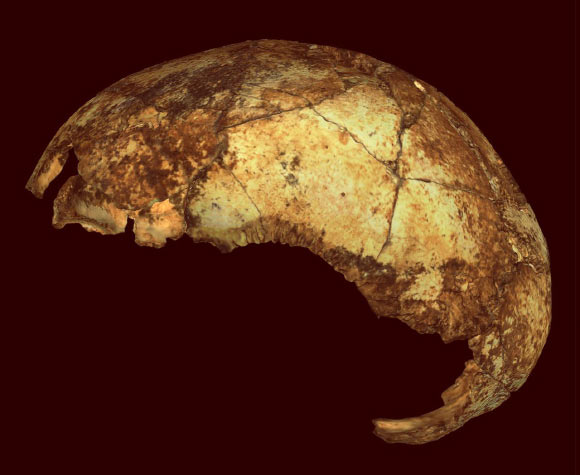
In 2020, Herries and colleagues described DNH 134, a cranium recovered from the Drimolen Main Quarry in South Africa, and dated it to between 2.04 and 1.95 million years old. It is currently the earliest fossil with clear Homo erectus affinities — roughly 150,000 to 200,000 years older than the previous oldest secure attribution.
That date comes with a genuine asterisk, and it's worth keeping rather than smoothing over. Whether the early African material — DNH 134 included — belongs in Homo erectus proper, or in a separate species called Homo ergaster, is a real, unresolved argument in the taxonomic literature. It isn't PaleoDex hedging; it's the field itself still arguing about where to draw a species line.
On the more restrictive reading, which excludes the contested African material, the oldest securely-attributed Homo erectus fossils outside Africa are the Dmanisi hominins in the Republic of Georgia, dated to about 1.85–1.78 million years old (Ferring et al. 2011). Either way you count it — the African cranium or the Georgian site — nothing else in the human lineage comes close to that span. The headline survives the taxonomic hedge; it just survives it a little more cautiously.
From Africa to Asia, and still going
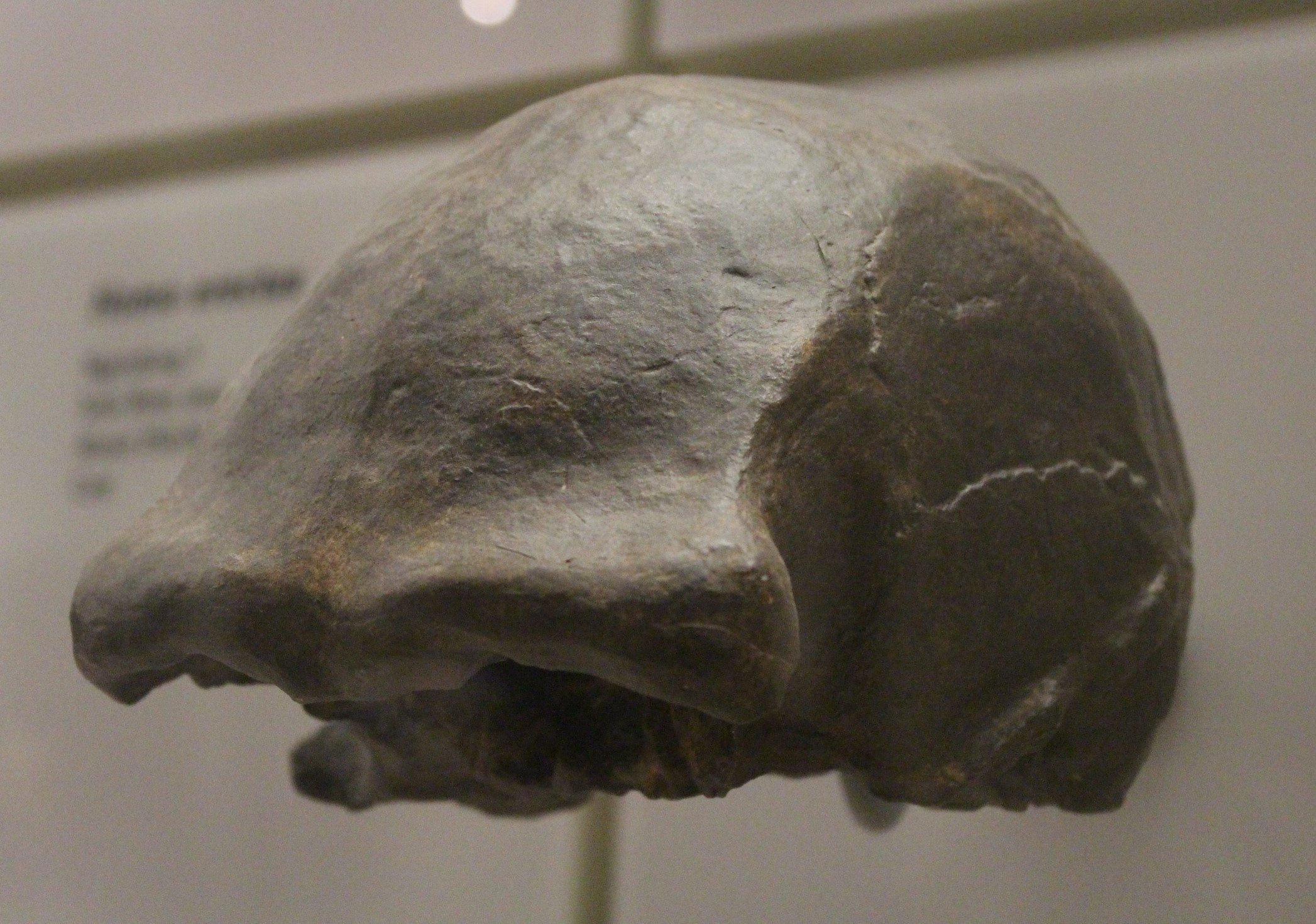
Once it appears, Homo erectus doesn't stay put. The species spreads across Asia, and fossils attributed to it turn up from the Republic of Georgia to Java over the following one and a half million years or so. That geographic spread is itself part of the longevity story: this wasn't a population that held on quietly in one refuge, it was a species that kept persisting across an enormous range for an enormous stretch of time.
The end date moved the wrong way
If Homo erectus's first appearance is debated by a few hundred thousand years at most, its last appearance is the part of the story that actually surprised the people working on it.
The youngest confirmed Homo erectus remains anywhere come from Ngandong, on the Solo River in Java — the same site where the fossils were first excavated in the 1930s. A 1996 estimate, based on the dating methods available at the time, put the youngest material there at somewhere between 53,000 and 27,000 years old.
In 2020, Rizal and colleagues went back to the actual site with Bayesian modelling across 52 separate radiometric age estimates, spanning the terrace, site and local scales. Their result didn't confirm the old number, and it didn't push it younger, which is what you'd expect if dating methods were simply getting more precise around an existing figure. It pushed the youngest secure Homo erectus material older — to 117,000 to 108,000 years ago. One of the paper's own co-authors, Gert van den Bergh, described it as "the most rigorous dating attempt thus far" for the site. That is the current, best-supported end of the Homo erectus record.
Our own species is the young one
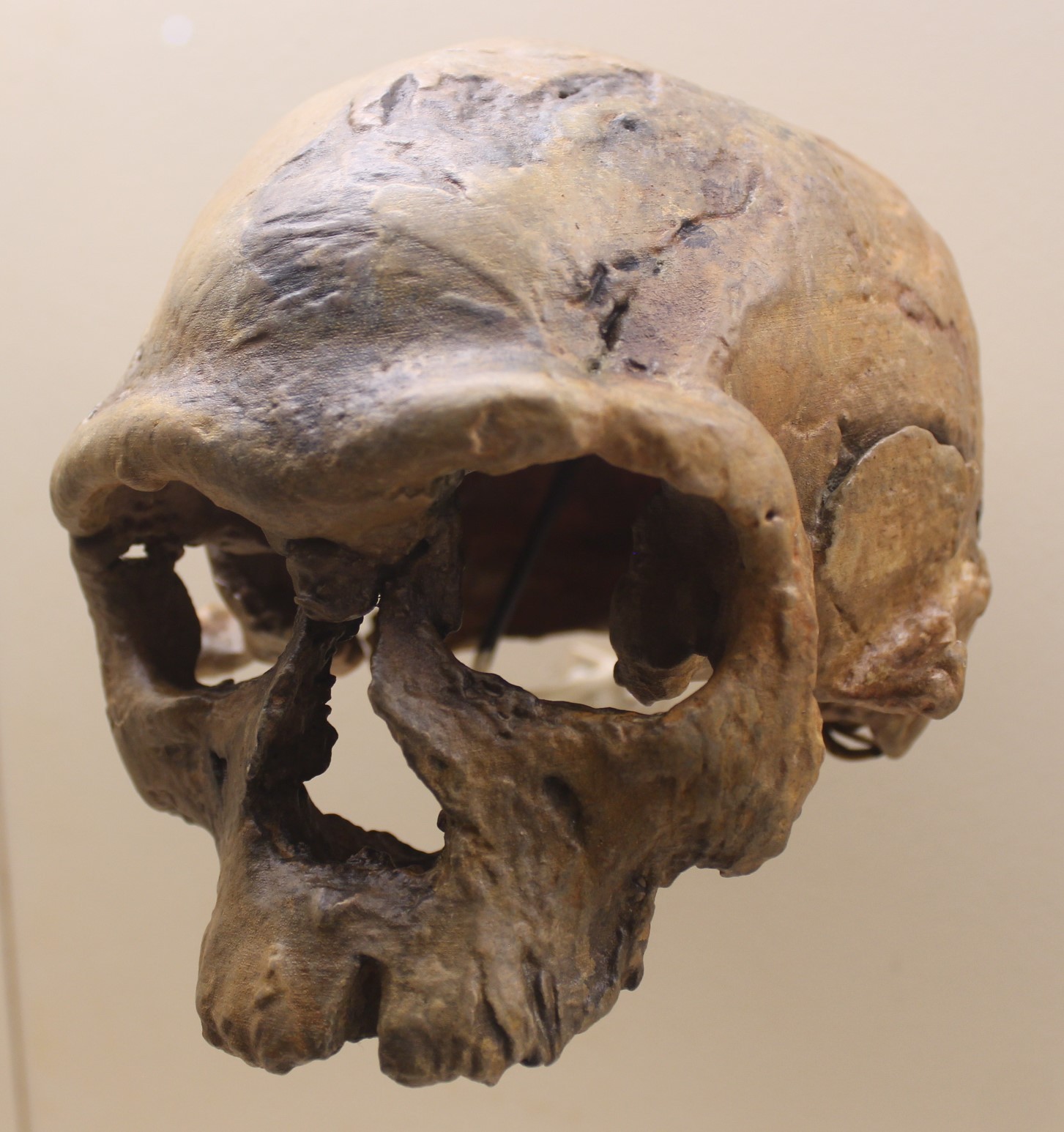
For comparison: the oldest securely-dated Homo sapiens fossils come from Jebel Irhoud, Morocco — skulls, teeth and long bones from at least five individuals, described by Hublin and colleagues in 2017. A companion paper by Richter and colleagues, published the same year, used thermoluminescence dating on fire-heated flint found directly with the remains to put the site at 315,000 ± 34,000 years old, with a fuller range of 383,000 to 247,000 years. Rounded honestly to reflect that uncertainty, Homo sapiens is roughly 300,000 years old.
Put the two spans side by side: Homo erectus ran for something close to 1.9 million years. Homo sapiens has been around for about 300,000. That works out to more than six times longer — not "close to seven times," which the raw ratio (about 6.3×) doesn't quite support. Homo erectus outlasted every other human species that has ever existed, including, so far, us.
What this isn't about
It's tempting, once you're comparing two human species, to reach for the questions that usually come with that territory: whose brain was bigger, who interbred with whom, who descended from whom. None of that is what the dates above are showing. This is a comparison of fossil-attested time spans — first appearance to last appearance, for two species, using the papers that dated them. Brain size, ancestry and interbreeding are different questions with their own literatures, and folding them in here would blur an argument that stands fine on its own.
Why this belongs in PaleoDex
Longevity in the fossil record isn't measured by who's left standing at the end — it's measured by how much time separates the oldest confirmed appearance from the youngest confirmed one, and both ends have to survive scrutiny. Homo erectus clears that bar by a wide margin, on either the generous or the restrictive reading of the African evidence. It's also a useful reminder that "modern humans are evolution's success story" is an assumption, not a measurement — and the record doesn't actually support it, at least not yet. For a related case where a small, strange human species took decades to be taken seriously, see our piece on Homo floresiensis. And for the fuller catalogue this kind of fact comes from, see the Fossil Dex.
Sources
Every date above traces to the primary literature:
- Herries, A.I.R., Martin, J.M., Leece, A.B., et al. (2020). "Contemporaneity of Australopithecus, Paranthropus, and early Homo erectus in South Africa." Science 368(6486): eaaw7293. Source for the DNH 134 cranium and its 2.04–1.95 million-year date.
- Ferring, R., Oms, O., Agustí, J., et al. (2011). "Earliest human occupations at Dmanisi (Georgian Caucasus) dated to 1.85–1.78 Ma." PNAS 108(26): 10432–10436. Source for the restrictive-reading date outside Africa.
- Rizal, Y., Westaway, K.E., Zaim, Y., et al. (2020). "Last appearance of Homo erectus at Ngandong, Java, 117,000–108,000 years ago." Nature 577: 381–385. Source for the re-dated end of the Homo erectus record, superseding Swisher et al. (1996).
- Hublin, J.-J., Ben-Ncer, A., Bailey, S.E., et al. (2017). "New fossils from Jebel Irhoud, Morocco and the pan-African origin of Homo sapiens." Nature 546: 289–292. Source for the Jebel Irhoud fossil description.
- Richter, D., Grün, R., Joannes-Boyau, R., et al. (2017). "The age of the hominin fossils from Jebel Irhoud, Morocco, and the origins of the Middle Stone Age." Nature 546: 293–296. Source for the 315±34 ka thermoluminescence date.
- Spoor, F., Leakey, M.G., Leakey, L.N., et al. — see also Spoor, F. et al. (2007), "The taxonomic implications of cranial shape variation in Homo erectus." Journal of Human Evolution 53(4): 373–403, for the Homo erectus / Homo ergaster taxonomic debate.
The real record, in your pocket.
PaleoDex catalogues the real fossil record, and every fact in it is sourced. Get the app.
GET IT ON GOOGLE PLAY →