The Bone Wars
PALEODEX · 13 July 2026 · 7 min read
Nearly every dinosaur you can name came out of a twenty-year grudge match between two men who despised each other. They bribed, spied, stole, and dynamited their way across the American West — and built a science by accident.
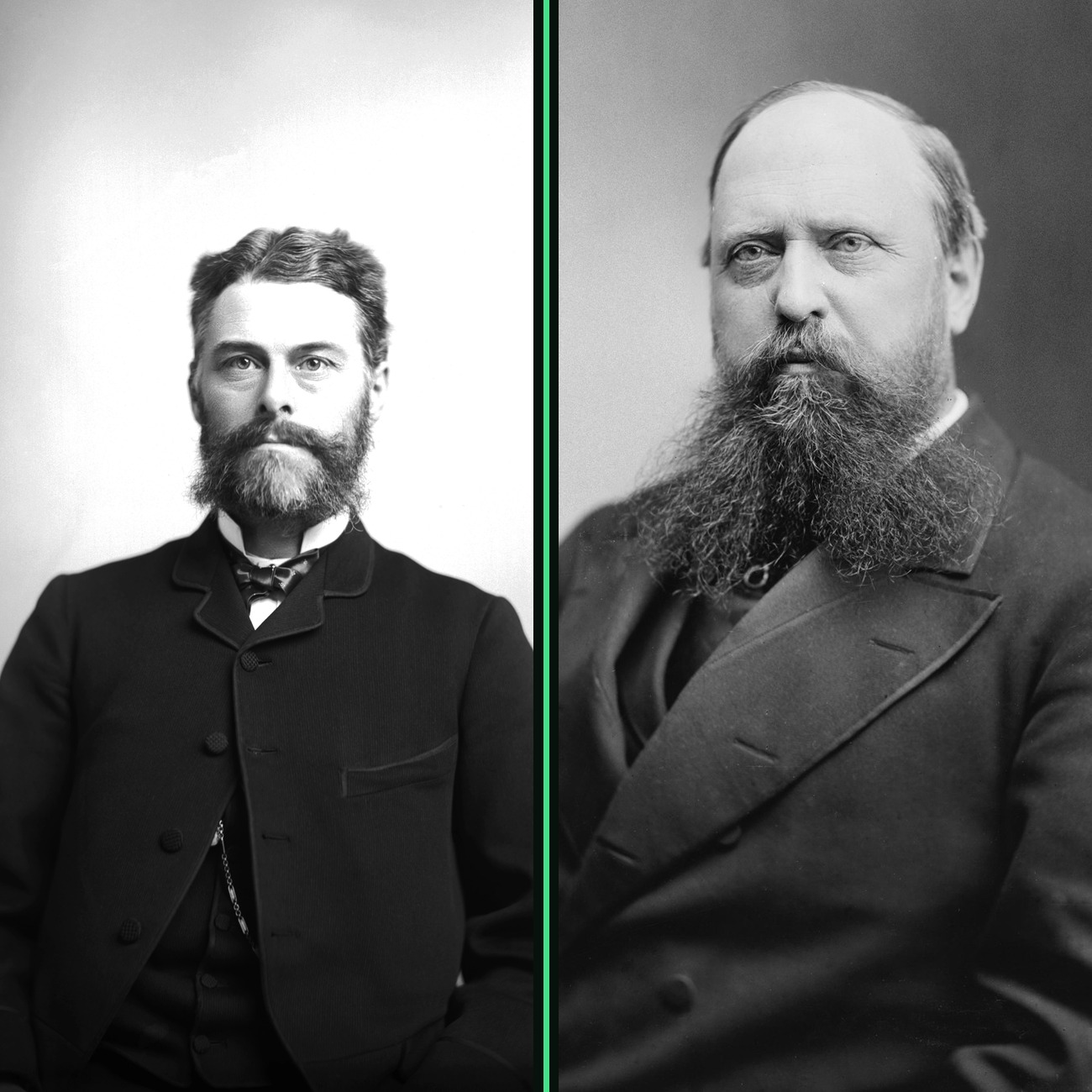
Picture the scientist who "discovered the dinosaurs," and you probably picture someone noble. The truth is pettier, and far more entertaining. Stegosaurus, Triceratops, Diplodocus, Allosaurus — almost every dinosaur on a child's bedroom wall was named by one of two men who spent twenty years trying to ruin each other. They called it a race. History calls it the Bone Wars.
The blunder, and the wrong culprit

The origin story is a humiliation. In 1868, Edward Drinker Cope unveiled a spectacular new sea reptile, Elasmosaurus, and made one unforgettable mistake: he put the skull on the wrong end, mounting the head at the tip of what was actually the tail.
Almost every popular retelling of the Bone Wars then says his rival Othniel Charles Marsh spotted it and made sure the world knew. He didn't. The correction was made in public by Joseph Leidy, the senior anatomist who had helped train Cope, at a meeting of the Academy of Natural Sciences of Philadelphia on 8 March 1870, and printed in the Academy's Proceedings that year. Marsh was in the room. His claim to have caught it himself does not surface until 1890, two decades later, in the middle of the newspaper war described further down this page.
Cope versus Marsh
The two could hardly have been more evenly matched. Cope worked out of Philadelphia, a prodigy who published at a furious pace. Marsh had Yale, the Peabody Museum, and a wealthy uncle's fortune behind him. For roughly two decades, from the early 1870s into the 1890s, they raced each other across the fossil beds of the West: Como Bluff in Wyoming, the Morrison Formation in Colorado, each man desperate to out-collect and out-name the other. The rule of the game was brutally simple. Whoever published a name first, won.
No rules
And there were no rules. Marsh secretly paid the operators at Cope's own dig sites to reroute fossils to him; both men bribed away each other's field crews. They planted spies in rival camps. When a season ended, teams smashed leftover bones and filled quarries with rubble so the other side couldn't work them, and some sites were reportedly dynamited shut. Workers threw rocks across the pits.
There is a quieter casualty in all this. Joseph Leidy, the man who had actually corrected the Elasmosaurus and the most careful describer of fossils in America, simply gave up on the West. He could not match two rivals who were buying whole quarries out from under him, and he withdrew from vertebrate paleontology altogether. The field's most scrupulous worker was pushed out by its two least scrupulous.
The war goes to Washington
By the 1880s the fight had left the quarries. In 1882 Marsh was appointed vertebrate paleontologist of the U.S. Geological Survey under John Wesley Powell: an official post, a federal budget, and a lever over his rival. In 1889 the government moved to claim the fossils Cope had collected on federally funded surveys as public property. Cope, by then close to broke, handed a journalist named William Hosea Ballou his accumulated file on Marsh.
On 12 January 1890 the New York Herald ran it under the headline "Scientists Wage Bitter Warfare." Cope accused Marsh of plagiarising his own assistants and mismanaging public money; Marsh answered in print; the two spent roughly a fortnight tearing at each other in a daily newspaper. It worked, in the worst possible way. Congress took an interest, cut the Survey's appropriation, and in 1892 Powell, damaged by the whole affair, asked Marsh to resign. Marsh lost the post he had been using as a weapon.
What the war built
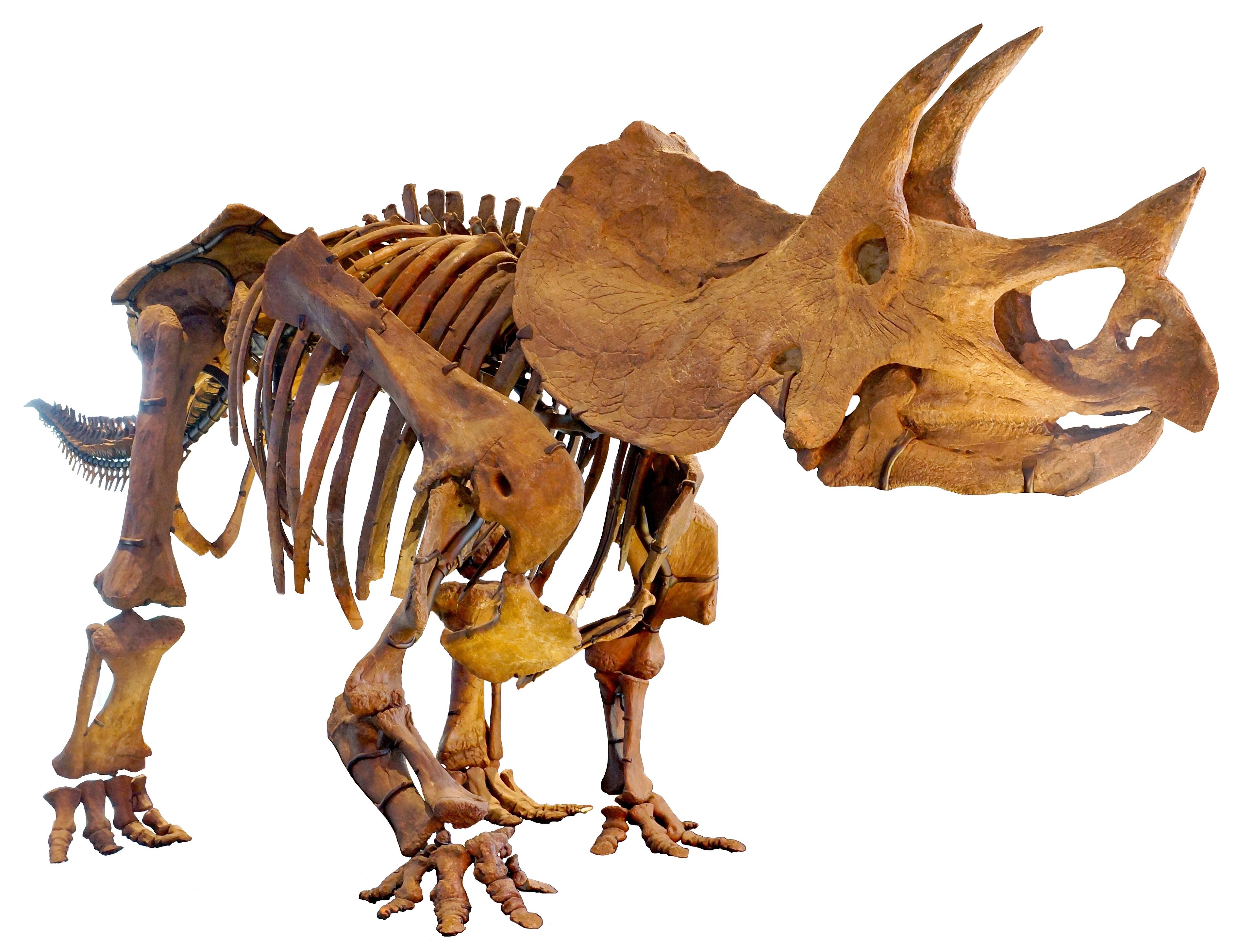
Here is the twist that makes the ugly story worth telling: all that racing produced an avalanche of discovery. Between them, Cope and Marsh described more than 130 new dinosaur species, on a continent that had barely 9 named before they started. Stegosaurus, Triceratops, Diplodocus, Allosaurus, Apatosaurus, Camarasaurus, Coelophysis. The roll call of "classic" dinosaurs is essentially their box score. To a startling degree, the dinosaurs of your childhood are a list of creatures two enemies named to spite each other.
It ruined them both
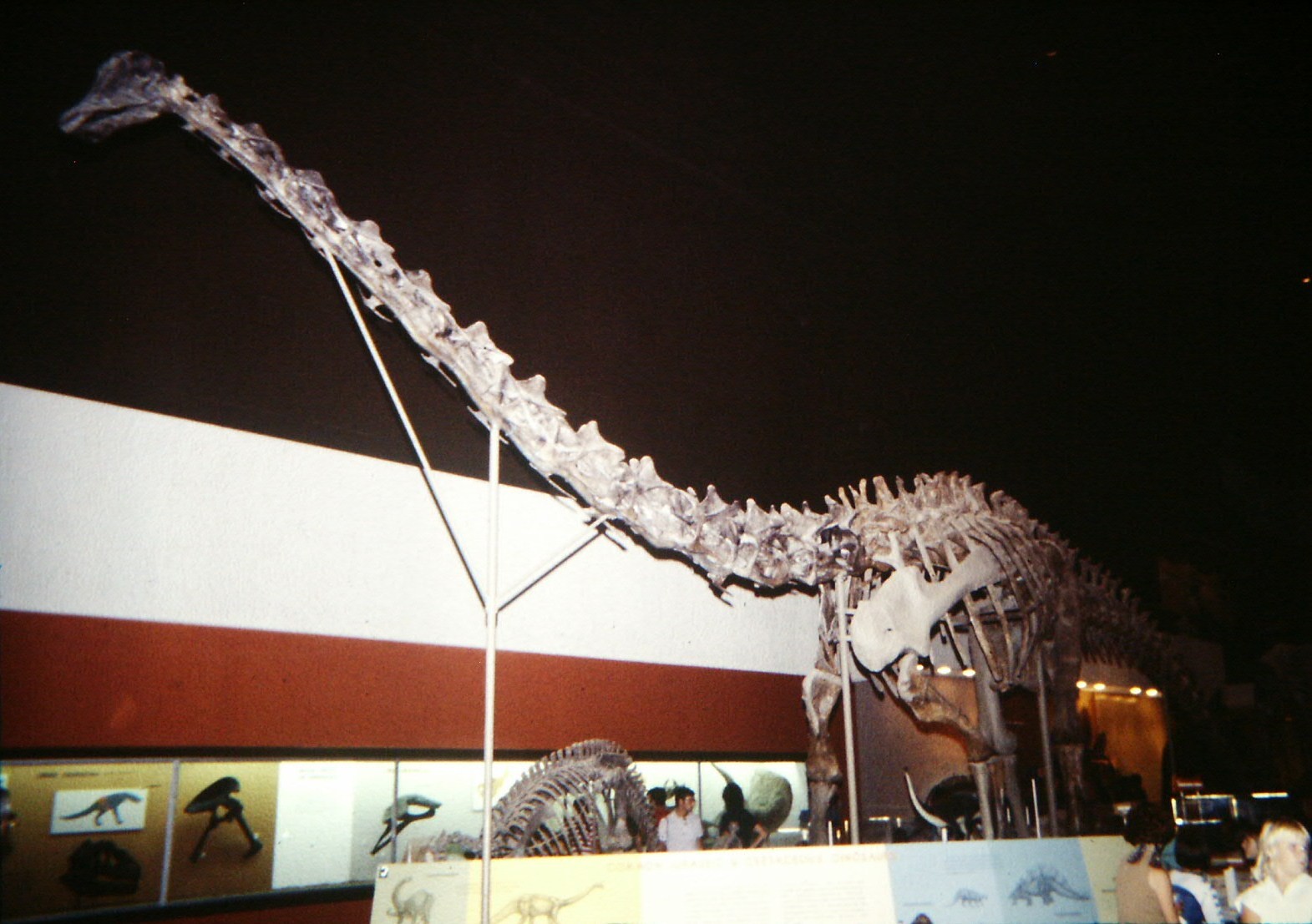
The speed came at a price. Rushing to publish, Marsh mounted the wrong skull on a sauropod he called Brontosaurus, an error that tangled the Brontosaurus–Apatosaurus name for over a century. And the feud destroyed both men. By the time Cope died in 1897, he had sold off much of his fossil collection just to survive; Marsh had mortgaged his house and asked Yale for a salary to live on. Cope's final move was pure, magnificent spite: he willed his skull to science, hoping a measurement would prove his brain was larger — and so, he reasoned, that he was smarter — than Marsh's. Marsh never took the bet.
Why this belongs in PaleoDex
Strip away the sabotage and the Bone Wars is really a story about how knowledge gets made: messily, competitively, by flawed people chasing credit. The fossils the two men tore out of the ground are still in museums today, still real, still teaching us. That is the whole PaleoDex idea, the real record with the receipts attached. Browse the creatures they named in the Fossil-DEX, watch their world drift across the eras on the Continental Drift map, and check where every fact comes from. Then settle the argument the two of them never could: Cope, or Marsh — whose side are you on?
Sources
Where each part of the story comes from, and which account we followed where the popular version and the record disagree:
- Leidy, J. (1870). "Remarks on Elasmosaurus platyurus." Proceedings of the Academy of Natural Sciences of Philadelphia 22:9–10 — the primary record of the public correction, made on 8 March 1870. Cope's original description is Cope, E. D. (1868), same Proceedings, 20:92–93.
- Davidson, J. P. (2002). "Bonehead Mistakes: The Background in Scientific Literature and Illustrations for Edward Drinker Cope's First Restoration of Elasmosaurus platyurus." Proceedings of the Academy of Natural Sciences of Philadelphia 152. (researchgate.net)
- Everhart, M. J., "The Tale of a Tail," oceansofkansas.com — on Marsh's 1890 claim to have caught the error, which it judges to have "no basis in fact." (oceansofkansas.com)
- DJangi, P. (21 May 2024). "They were rock stars of paleontology—and their feud was legendary." National Geographic — the 1889 fossil seizure, Ballou, and the 12 January 1890 Herald exposé. (nationalgeographic.com)
- "O.C. Marsh and E.D. Cope: A Rivalry," American Experience, PBS — the Herald headline, the congressional aftermath, and Cope's finances. (pbs.org)
- Jaffe, M. (2000). The Gilded Dinosaur: The Fossil War Between E. D. Cope and O. C. Marsh and the Rise of American Science — narrative background only; no figure in this article rests on it.
- Wikipedia, "Bone Wars" and "Othniel Charles Marsh" — species counts (80 to Marsh, 56 to Cope, against nine named in North America beforehand), Leidy's withdrawal from the West, and Marsh's 1882–1892 Survey post, each with primary citations.
The real record, in your pocket.
PaleoDex catalogues the real fossil record — every creature real, every fact sourced. Get the app.
GET IT ON GOOGLE PLAY →