Why Do We Still Picture Neanderthals Hunched Over?
PALEODEX · 30 August 2026 · 6 min read
The shuffling, ape-like Neanderthal is one of the most durable images in popular science. It comes from a single skeleton, one scientist's reconstruction, and an excuse for that reconstruction that specialists quietly retired decades ago — a correction that, itself, is now old enough that most people have never heard it.
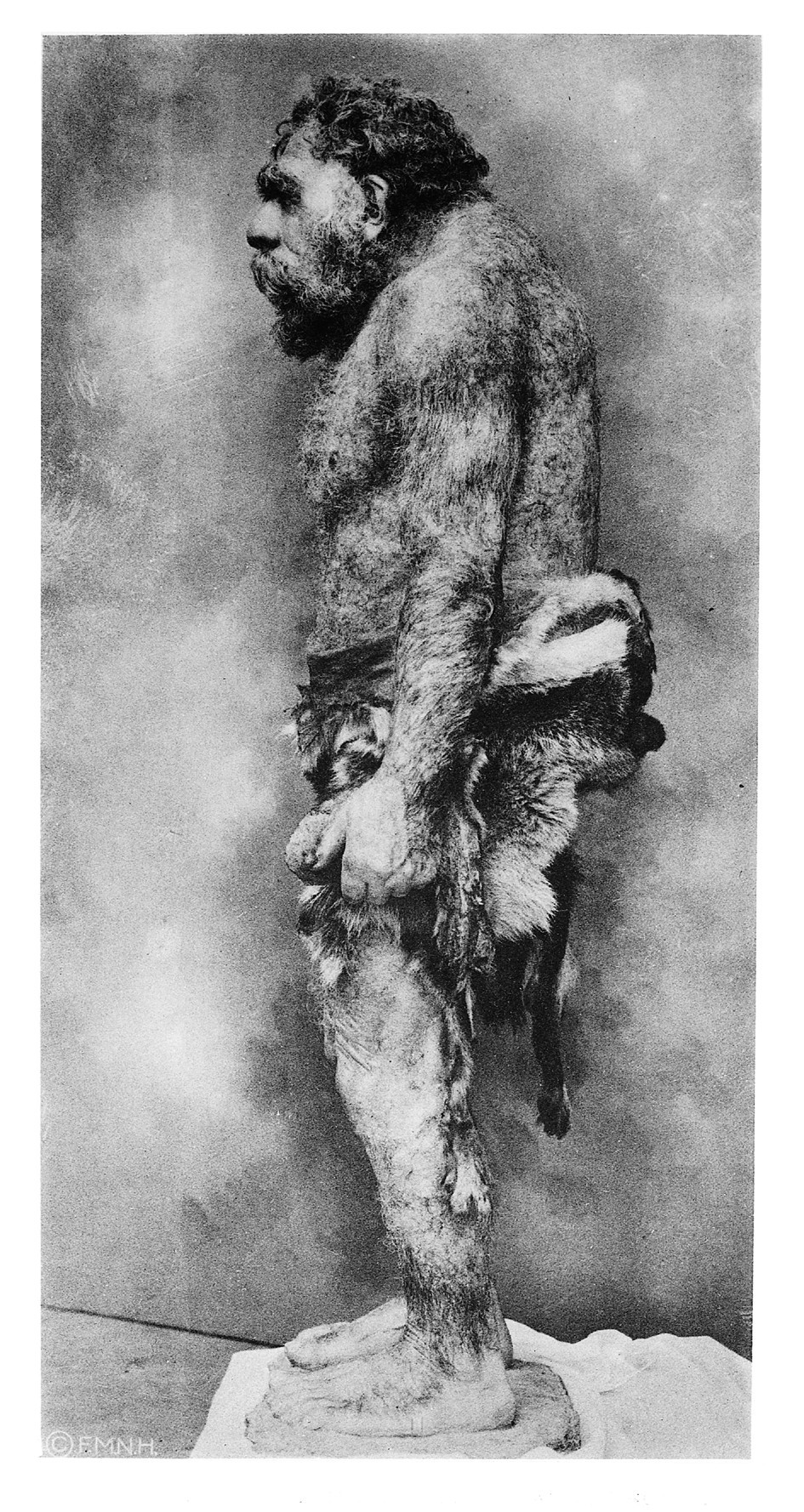
Ask most people to picture a Neanderthal and they'll describe roughly the same thing: hunched shoulders, bent knees, a forward-jutting head, a shuffling ape-like gait. That image has appeared in textbooks, museum dioramas and magazine illustrations for well over a century. It comes from exactly one skeleton.
One old man, found in France in 1908
On 3 August 1908, French prehistorians Jean and Amédée Bouyssonie and Louis Bardon found a Neanderthal skeleton in a cave system near La Chapelle-aux-Saints, in the Corrèze department of France. It belonged to an elderly male, and it was the most complete Neanderthal skeleton known at the time — real bones, found in situ, not a fragment or a cast.
The remains went to Marcellin Boule, a paleontologist at the Musée national d'Histoire naturelle in Paris. Boule spent roughly two years studying them, publishing his reconstruction and monograph, L'Homme fossile de La Chapelle-aux-Saints, across 1911 and 1913.
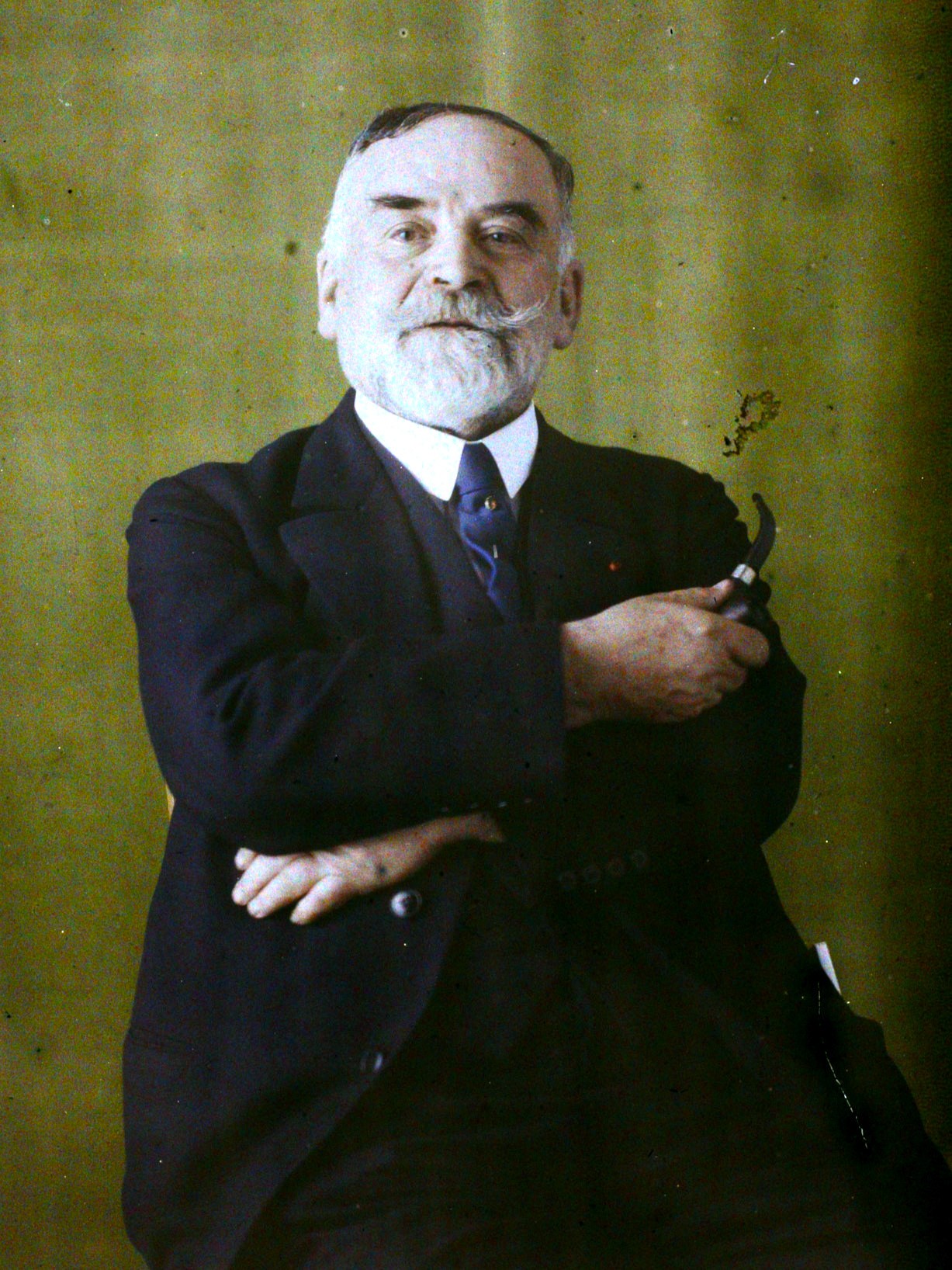
Boule's reconstruction gave the world a stooped, forward-bent, ape-like figure — and it became the template. It's not that every subsequent illustration copied Boule's plates directly; it's that his reconstruction set the terms professional science worked from for decades, and popular illustrations followed.
The standing excuse: he was just old and sick
For a long stretch of the 20th century, the accepted fix for Boule's error had nothing to do with Boule. In 1957, anatomists William Straus Jr. and A.J.E. Cave published "Pathology and the Posture of Neanderthal Man" in the Quarterly Review of Biology. They identified real degenerative joint disease — osteoarthritis — in the La Chapelle-aux-Saints skeleton, and the field settled on a tidy explanation: Boule hadn't gotten Neanderthal posture wrong in general. He'd just picked an unlucky, sick individual, and mistaken his condition for the species' normal stance.
That reading held for decades. It's the version most popular accounts still repeat when they bother to explain the hunched image at all.
The excuse doesn't hold up either
It's also not quite right. In 1985, anthropologist Erik Trinkaus published a detailed re-examination, "Pathology and the posture of the La Chapelle-aux-Saints Neandertal," in the American Journal of Physical Anthropology. He catalogued the individual's real pathologies — degenerative disease in the neck and upper back, a healed rib fracture, significant arthritis in the hip, more — and reached a sharper conclusion than the 1957 paper had: none of those conditions were severe enough to have caused the posture Boule drew.
Trinkaus traced Boule's actual errors to two things instead: the fragmentary, incomplete state of the remains, and Boule's own evolutionary preconceptions about what a "primitive" hominin should look like. In other words, the mistake wasn't medical. It was interpretive — and it happened at least in part because Boule expected to find something ape-like, and built it into the gaps.
2019: a normal human curve
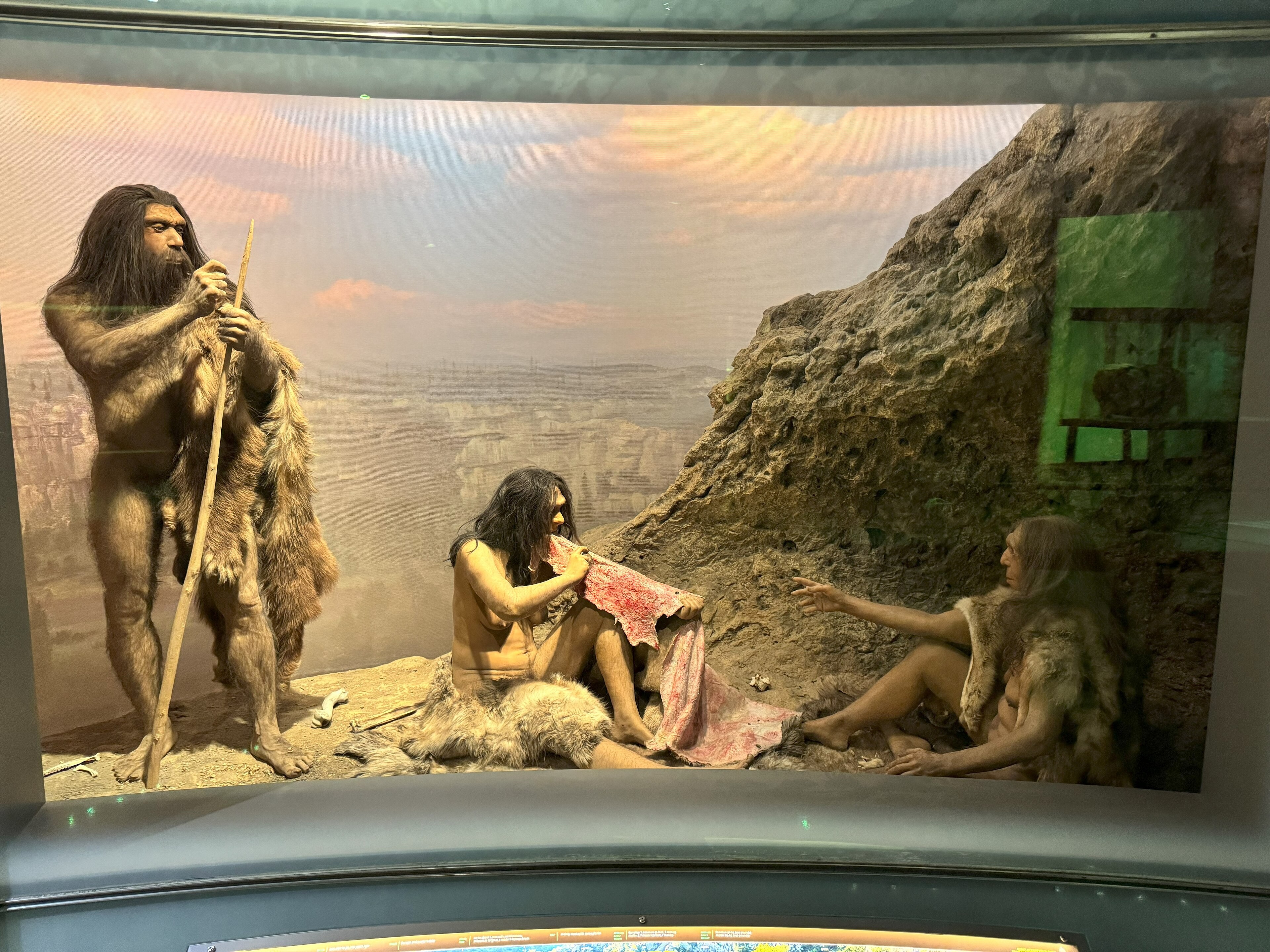
The most direct correction came in 2019, when a team led by Martin Haeusler (with Trinkaus himself among the co-authors) published "Morphology, pathology, and the vertebral posture of the La Chapelle-aux-Saints Neandertal" in PNAS. Working from a new virtual reconstruction — built from the pelvis, not the spine directly — the team found pelvic incidence and lumbar lordosis within the modern human range. That's the anatomical language for a normal inward curve in the lower back, not the flattened, ape-like profile long assumed for the species.
It isn't fully settled. A 2012 paper by Ella Been, Asier Gómez-Olivencia and Patricia Kramer, "Lumbar lordosis of extinct hominins," argues for a flatter, less-curved lower back in Neanderthals generally, including this individual. Haeusler's 2019 reconstruction and the 2012 lordosis study disagree, and the honest summary is that the argument is live — not that one side has definitively won.
Seventy years, and the image never left
Put the dates together and the shape of the story gets clearer. The arthritis excuse dates to 1957. The direct pelvis-based correction dates to 2019 — and it isn't even the end of the argument. Either way, the 1957 paper that first tried to fix Boule's mistake is now nearly seventy years old, and the hunched, brutish image it was supposed to put to rest is still what most people picture when they hear the word "Neanderthal."
None of this is a case for reviving the opposite extreme — a "Neanderthals were secretly just like us" narrative goes further than the current evidence, and that's a different story for a different day. What's actually interesting here is narrower and, honestly, a little more useful: one flawed 1911 reconstruction of one elderly, arthritic man outlived not one but two attempts to correct it, and the correction that finally addressed Boule's own errors directly — not just his subject's health — barely made it into public awareness at all.
Why this belongs in PaleoDex
This is exactly the kind of story the record is good at separating out. Boule's 1911–13 reconstruction is settled history, and we say so. The arthritis explanation is a documented historical claim, and we say when and why it was superseded. The 2019 pelvis reconstruction is real, sourced science — and so is the fact that it doesn't have the last word. Getting each of those right, distinctly, is the whole point. Read more corrected-myth deep dives from the record.
Sources
Every fact above is drawn from the primary and authoritative literature:
- Boule, M. (1911–1913). L'Homme fossile de La Chapelle-aux-Saints. Annales de Paléontologie. (the original reconstruction and monograph)
- Straus, W.L. Jr. & Cave, A.J.E. (1957). "Pathology and the Posture of Neanderthal Man." Quarterly Review of Biology 32:348–363. (the arthritis explanation)
- Trinkaus, E. (1985). "Pathology and the posture of the La Chapelle-aux-Saints Neandertal." American Journal of Physical Anthropology 67:19–41. (doi.org/10.1002/ajpa.1330670105) — the overlooked correction
- Haeusler, M., Trinkaus, E., Fornai, C., Müller, J., Bonneau, N., Boeni, T. & Frater, N. (2019). "Morphology, pathology, and the vertebral posture of the La Chapelle-aux-Saints Neandertal." PNAS 116(11):4923–4927. (doi.org/10.1073/pnas.1820745116) — the pelvis reconstruction
- Been, E., Gómez-Olivencia, A. & Kramer, P.A. (2012). "Lumbar lordosis of extinct hominins." American Journal of Physical Anthropology 147:64–77. — the live dissent
- Madison, P. (2020). "Characterized by Darkness: Reconsidering the Origins of the Brutish Neanderthal." Journal of the History of Biology 53(4):493–519. (doi.org/10.1007/s10739-020-09623-4) — on the stereotype's older origins
The real record, in your pocket.
PaleoDex catalogues the real fossil record, and every fact in it is sourced. Get the app.
GET IT ON GOOGLE PLAY →