They Brought Back the Dire Wolf. Did They?
PALEODEX · 6 August 2026 · 8 min read
Twenty edits, fourteen genes, and an argument about what a word means.
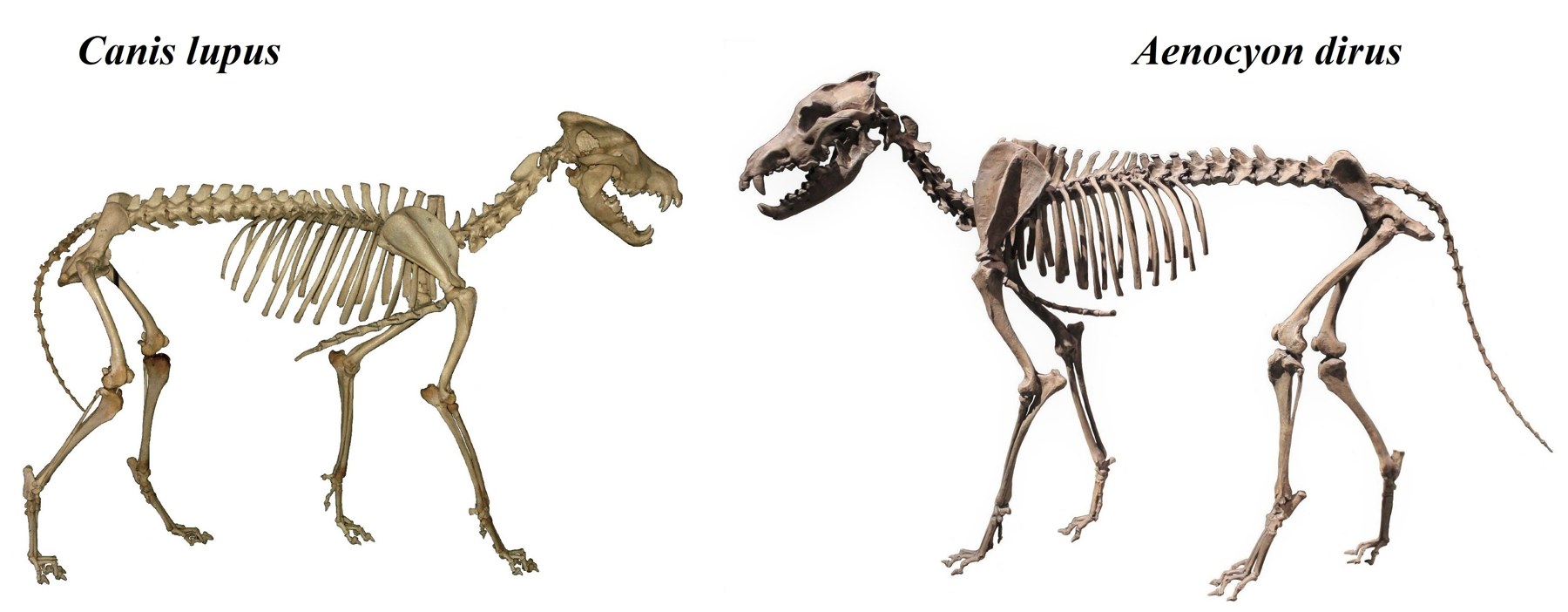
In April 2025 a company said it had brought the dire wolf back. Three white pups — Romulus, Remus and Khaleesi — and the photographs went everywhere. The argument that followed was not about whether the gene editing worked. Everyone agrees it did. It was about what to call the result.
So it is worth going slowly through what was actually done, because the method answers most of the question on its own.
What was actually done
Colossal Biosciences drew blood from a living grey wolf and grew cells from it — endothelial progenitor cells, the kind that line blood vessels, which is a less invasive route than a tissue biopsy. Separately, the team sequenced DNA from two dire wolf fossils and compared the two genomes.
Then they rewrote 14 genes in those grey wolf cells to match what they had read in the fossil genome — 20 changes in total. That figure is the company’s own: a Colossal spokesperson has put it as “we stated we made 20 gene edits to grey wolf cells.”
The edited nucleus was then cloned into an egg cell, and domestic dogs carried the pregnancies. Romulus and Remus were born in October 2024; Khaleesi followed in January 2025.
The part most people miss
No dire wolf DNA went into these animals. The fossil genome was a reference, not an ingredient — grey wolf genes were edited to resemble what had been read in it. This is the single most widely misunderstood fact in the story, and once you have it, most of the rest of the argument arranges itself.
Five edits that are not dire wolf at all
Of the twenty changes, fifteen match sequences read from the fossils. Five do not. Those five produce a pale coat by a different route: the actual dire wolf pigmentation variants were judged to risk deafness and blindness in a grey wolf, so the team induced loss of function in two other pigmentation genes instead, by a route known to be safe.
That is a careful decision, and it deserves saying out loud. Reporting only the half of this story that cuts one way would not be reporting.
Half a percent is not a rounding error
Colossal has said the dire wolf and grey wolf genomes are 99.5% identical. That sounds like a rounding error until you put a number under it. A canid genome runs to roughly 2.5 billion base pairs, so the remaining half a percent still comes to more than twelve million differences between the two animals.
Twenty edits is twenty.
The part that is not a matter of opinion
Here the story stops being about framing and starts being about taxonomy. A dire wolf is not in the genus Canis at all.
In 2021 a team sequenced five dire wolf genomes from sub-fossil remains and found a highly divergent lineage that split from living canids around 5.7 million years ago, with no evidence of gene flow with North American grey wolves or coyotes. On that evidence the animal was moved into a genus of its own — Aenocyon, a name John Campbell Merriam had proposed a century earlier.
And this is not a point being scored against the company. Colossal’s own paper on dire wolf ancestry, peer reviewed and published in Cell Genomics in July 2026, calls the animal Aenocyon dirus throughout. So does Colossal’s own website.
So is it a dire wolf?
That is where the argument actually sits, and it is not an argument about measurements. Nobody disputes the twenty edits.
Colossal’s chief science officer, Beth Shapiro, described the animals to New Scientist as grey wolves with 20 edits that are cloned, and added that the company had said so from the beginning. The company’s stated framework is the morphological species concept: if an animal looks like the animal, it is the animal. Its critics apply different species concepts and reach different answers; a 2026 paper in The Anatomical Record works through that case at length.
Colossal itself has said that species are ultimately a human construct and that other scientists have a right to disagree and call them whatever they want to call them. On that much, at least, everybody agrees.
What is uncontested
These are real animals. That was real genome editing, at a scale nobody had reached in a vertebrate before. And the disagreement that followed is a real argument about what a species is — which is a question about us, not about the wolf.
Which means the fight was never really about the wolf. It is about who gets to decide what a word means.
You can browse the extinct record, Aenocyon dirus included, in the Fossil Library, watch the continents move under it on the Continental Drift map, and see where every fact comes from.
Sources
Every claim above traces to a primary source or to the company’s own published statements.
- Perri et al. 2021 — “Dire wolves were the last of an ancient New World canid lineage”, Nature 591:87–91
- Gedman et al. 2026 — “On the ancestry and evolution of the extinct dire wolf”, Cell Genomics
- Callaway 2025 — “This company claimed to de-extinct dire wolves. Then the fighting started”, Nature news
- Jensen-Seaman, Hartstone-Rose, Burrows & Smith 2026 — “The dire wolf (Aenocyon dirus) resurrection that wasn’t”, The Anatomical Record 309:1788–1796
- Colossal Biosciences — dire wolf project page and press materials (2025)
The real record, in your pocket.
PaleoDex catalogues the real fossil record, and every fact in it is sourced. Get the app.
GET IT ON GOOGLE PLAY →