Tanis: The Day the Dinosaurs Died?
PALEODEX · 19 July 2026 · 7 min read
In the badlands of North Dakota lies a fossil bed that seems to freeze the day the dinosaurs died — fish buried in a single surge, with beads of asteroid glass lodged in their gills. It's called Tanis. It may be the most extraordinary fossil site ever found. It may also be the most disputed, and not only over the science.
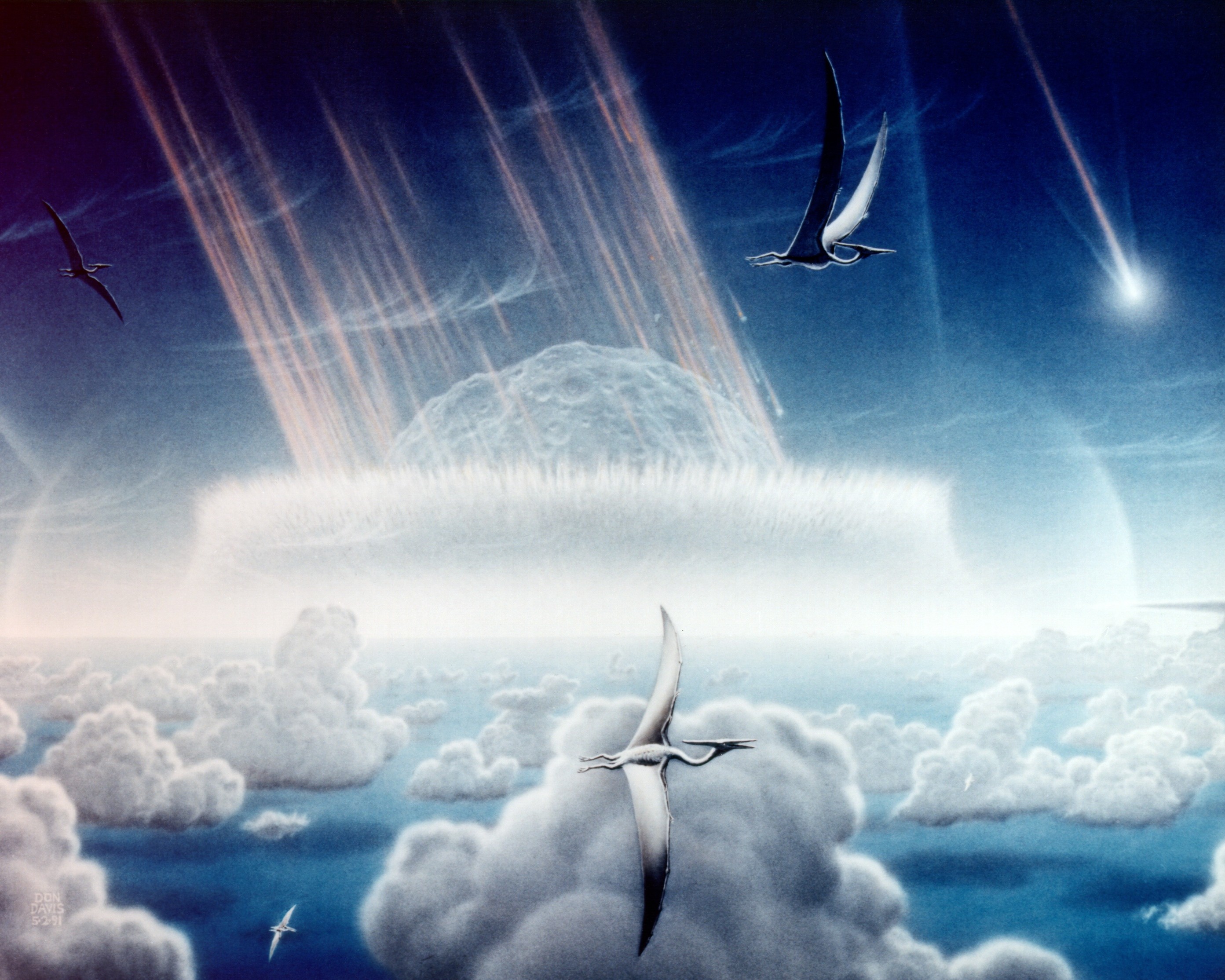
Most fossils are a snapshot of a life. Tanis, its discoverers argue, is a snapshot of a day: arguably the single worst day in the history of life on Earth. It is a breathtaking claim. It is also a contested one, and the honest version of this story keeps both halves in frame: the extraordinary fossils, and the extraordinary debate around what they mean and how they were handled.
A bed at the boundary
Tanis is a site in the Hell Creek Formation of southwestern North Dakota, in an ancient river channel about 3,000 kilometres from the Chicxulub impact crater buried under Mexico's Yucatán. It sits right at the Cretaceous–Paleogene (K–Pg) boundary, roughly 66 million years ago, the moment tied to the extinction of the non-bird dinosaurs. The site was found in 2008 and excavated by the paleontologist Robert DePalma.
The claim: minutes to hours
In 2019, DePalma and colleagues — including the physicist Walter Alvarez, whose family gave us the asteroid-impact theory in the first place — published Tanis in the journal PNAS. Their claim was startling: this jumbled bed of fish, plants and debris was buried not over centuries, but in the minutes to hours right after the Chicxulub impact. If true, Tanis would be a near-real-time record of the impact's aftermath, thousands of kilometres from ground zero.
The evidence is genuinely stunning
And the physical evidence is remarkable. When the asteroid hit, it flung molten rock skyward; it rained back down across the continent as tiny glass beads called spherules. At Tanis, those spherules are lodged in the gill rakers of more than half of the sturgeon and paddlefish carcasses — as if the fish inhaled the fallout as it fell. Some spherules are sealed, unweathered, inside amber. And the whole deposit is capped by a thin clay layer rich in iridium: the same chemical fingerprint of the impactor that marks the K–Pg boundary all over the world. Radiometric dating of the Tanis glass lands right at the impact age.
The mechanism is a hypothesis — not a proven fact
Here is the first place the popular retelling gets ahead of the science. How the bed formed so fast is a proposal, not a settled result. The team's leading idea is that seismic waves from the impact triggered a violent seiche (a sloshing surge in a local body of water) that buried everything within hours. But in 2024, a modelling study in the Journal of Geophysical Research: Solid Earth (LeVeque and colleagues) found that the impact's seismic shaking may not have been strong enough to produce the deposits on that timescale. The exact trigger is, in the field's own language, incompletely resolved.
And it's not only the science
Tanis is "hotly debated" for reasons beyond the seismic model — reasons about process. DePalma's Tanis claims were first unveiled in a long magazine feature days before the peer-reviewed paper appeared, which many paleontologists criticised (in Science, Slate and elsewhere) as presenting not-yet-vetted, extraordinary claims to the public ahead of scrutiny. And the Tanis site is privately controlled, with DePalma holding the fossils rather than depositing them in a public institution. Critics, including a past president of the Society of Vertebrate Paleontology, argued that this makes the claims hard for other researchers to independently verify.
The credibility cloud — flagged, not conflated
There is one more thread, and it needs care to state fairly. A separate DePalma paper (a 2021 Scientific Reports study arguing, from fish-bone chemistry, that the impact struck in northern-hemisphere spring) was formally investigated by the University of Manchester after another scientist, Melanie During, alleged he had rushed to scoop her competing work. The 2023 finding was not fabrication or fraud, but it did conclude there had been research misconduct in how the isotope data was compiled and presented.
So — what is Tanis, really?
Hold both halves at once. Settled: the fossils are real, about 66 million years old, and carry genuine impact glass and an iridium cap tied to Chicxulub. Contested: whether they capture a literal minute-by-minute snapshot of impact day, the physics of how they were buried, and the conduct and access around the project. Tanis is best understood as one team's disputed interpretation of an extraordinary site, not a textbook-settled "the day the dinosaurs died."
Why this belongs in PaleoDex
This is exactly the kind of story PaleoDex exists to get right. The extraordinary hook, fish with asteroid glass in their gills, is real and worth telling. The overreach ("a proven, minute-by-minute snapshot of doomsday") is worth marking clearly as contested. Extraordinary claims deserve extraordinary proof, tested out in the open, and a fair account says what we know, what we don't, and why people are arguing. Read more myth-vs-record deep dives from the record.
Sources
Every fact above is drawn from the primary literature and reputable reporting:
- DePalma, R.A., Smit, J., Burnham, D.A., … Alvarez, W. (2019). "A seismically induced onshore surge deposit at the KPg boundary, North Dakota." PNAS 116(17):8190–8199. doi:10.1073/pnas.1817407116 (pnas.org)
- LeVeque, S. et al. (2024). "Possible Mechanisms for Tsunami-Like Surge Deposits Due To the Chicxulub Impact at the K-Pg Boundary at the Tanis Site, North Dakota." J. Geophys. Res.: Solid Earth. doi:10.1029/2023JB027643 (AGU)
- "Extraordinary fossils reveal the last days of the dinosaurs — maybe." Science (April 2019). (science.org)
- "Dino-extinction researcher committed research misconduct — but not fraud, university report finds." Science (2023). (science.org)
- University of Manchester, statement on the investigation (2023). (manchester.ac.uk)
- Wikipedia, "Tanis (fossil site)." (en.wikipedia.org)
The real record, in your pocket.
PaleoDex catalogues the real fossil record — sourced, and honest about what's still debated. Get the app.
GET IT ON GOOGLE PLAY →