The Ice Age Giants Beneath Santiago
PALEODEX · 28 June 2026 · 6 min read
Mastodons, giant ground sloths and wild horses once roamed central Chile — and the fossil record puts them right beneath the modern city.
Open PaleoDex's radar near Santiago and the map lights up with names that sound almost mythical — Notiomastodon, Megatherium, Hippidion, Equus. They aren't invented. Tens of thousands of years ago, central Chile was home to a cast of Ice Age giants, and their bones still turn up in the ground beneath your feet.
A lost world at 34°S
During the late Pleistocene — the most recent stretch of the Quaternary, the period we map in Continental Drift — the central valley around Santiago looked very different. It was cooler and wetter, dotted with lakes and wetlands that fed herds of large grazers, along with the predators and scavengers that followed them. This was South America's own version of the Ice Age megafauna world.
Meet the giants
Notiomastodon platensis — a gomphothere, a distant cousin of today's elephants (not a true mastodon or a mammoth). The largest bulls stood around 2.8 m at the shoulder and may have weighed up to 6.5 tonnes — roughly a big African elephant — and were flexible mixed feeders, browsing leaves, grazing grasses, and eating fruit. It reached South America during the Great American Interchange, after the Isthmus of Panama joined the two continents.
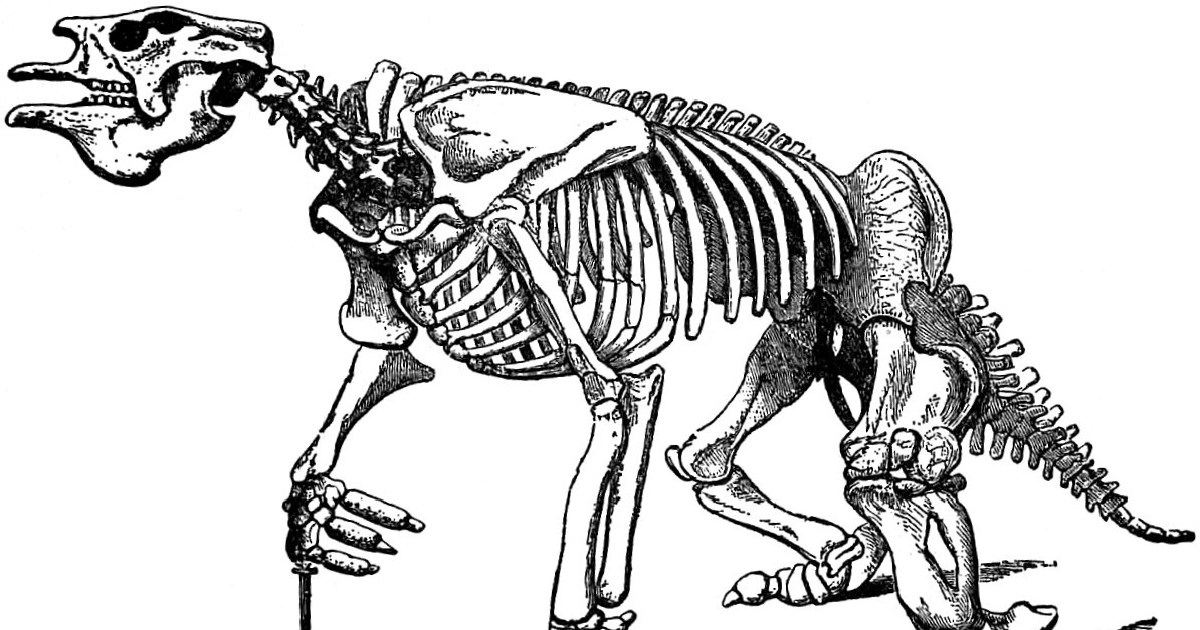
Megatherium — the giant ground sloth, elephant-sized at 3.5–4 tonnes, able to rear up on its hind legs to haul down branches. It was one of the largest land mammals the Americas ever produced.
Hippidion — a stocky, native South American horse. Horses actually evolved in the Americas, spread across the world, then vanished here at the end of the Ice Age — only returning thousands of years later with European settlers.
Equus — true horses also ranged across Pleistocene South America, living alongside Hippidion.
These four are exactly what PaleoDex surfaces on the map around Santiago — real genera, drawn from the fossil record, each with a sourced dossier in the Fossil-DEX.
Tagua Tagua: where people met the giants
About 80 km south of Santiago lies one of the most important Ice Age sites in South America: the former Laguna de Tagua Tagua. Around 12,600 years ago, some of the earliest people in the region camped on its shores and hunted and butchered gomphotheres there. Archaeologists have recovered burned, cut-marked and fractured bones, tools made from tusk and bone, and even a stone artifact embedded in a proboscidean — direct evidence of humans and megafauna meeting. With 28 animal taxa identified, it is the richest late-Pleistocene site in Chile.
Why they vanished
By roughly 10,000–12,000 years ago, Notiomastodon, Megatherium, Hippidion and most of South America's giant mammals were gone. Scientists still debate the causes — a rapidly warming climate at the end of the Ice Age, pressure from newly arrived human hunters, or, most likely, both at once. The same wave of extinctions took saber-toothed cats like Smilodon across the Americas.
Find them under your feet
This is the whole idea behind PaleoDex: the prehistoric world isn't somewhere else — it's beneath the city you already live in. Travel the Quaternary on the Continental Drift map, read sourced profiles in the Fossil-DEX, and — where it's legal, which in Chile means leaving fossils in place (see our Fossil Finder Guide) — understand the ground you walk on. Every creature is real, and if a fact isn't sourced, we leave it blank.
Sources
Compiled by PaleoDex from open scientific sources. Figures and dates follow published research and Wikipedia/Wikimedia; where a fact isn't sourced, we leave it out.
- Notiomastodon — Wikipedia
- Megatherium — Wikipedia
- Hippidion — Wikipedia
- Taguatagua 1 & 3, late-Pleistocene central Chile (research)
The past is local.
PaleoDex maps real fossil sites near you and turns 540 million years of life into a field adventure. Get the app.
GET IT ON GOOGLE PLAY →