Did T. Rex Have Lips? Here's How Paleontologists Tested It
PALEODEX · 30 July 2026 · 5 min read
How do you find lips that never fossilised? You don't look for the lips. You look for what the teeth don't show.
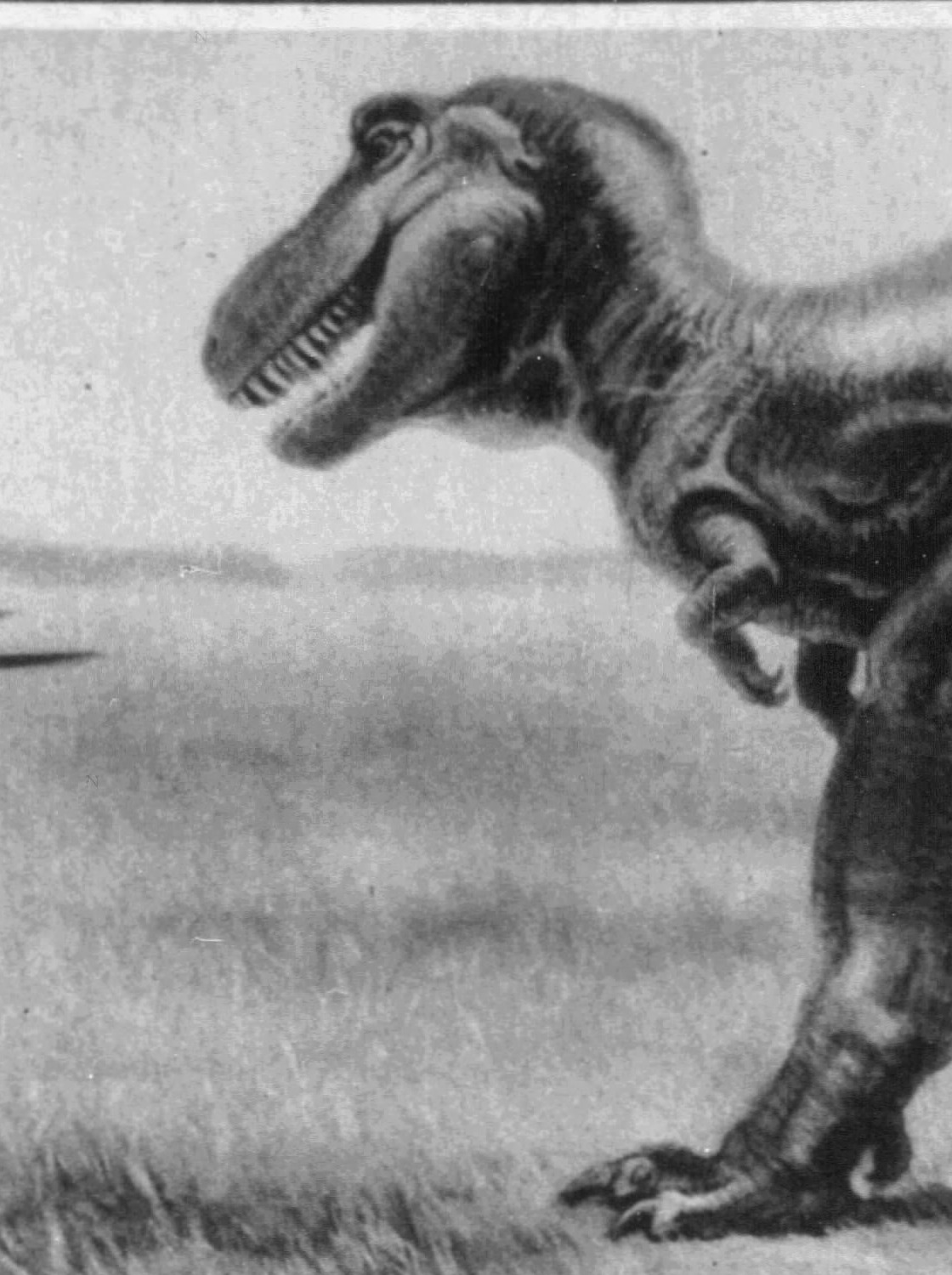
For more than a hundred years, Tyrannosaurus rex has been drawn with its teeth bared, hanging out over the jaw like a crocodile's. The reasoning behind that was never a fossil — it was that the teeth are enormous, and crocodilians are its closest living toothy look-alike. Nobody had actually tested it until a 2023 study in Science did exactly that.
A century of assumption, not evidence
That's the whole case for the toothy grin: big teeth, plus a superficial resemblance to a modern predator that also has big teeth and no lips. It isn't nothing, but it isn't a test either. Paleontologist Thomas Cullen and his co-authors set out to check whether it actually holds up, using two lines of evidence that don't depend on soft tissue having survived 66 million years.
Test one: do the teeth even fit?
The first test is a straightforward measurement. Plot tooth size against skull length across dozens of theropod dinosaurs and living monitor lizards — animals whose closed mouths hide their teeth completely — and see where the theropods land. If their teeth were too large to be covered, they'd sit off the lizard line, closer to what an exposed-toothed animal like a crocodile would need.
They don't. Theropod teeth, Tyrannosaurus included, fall squarely inside the range of living lizards that keep their teeth covered. Big teeth are not, on their own, evidence against lips — they just mean a bigger animal needs a bigger lip.
Test two: cut the teeth open
A regression only shows that lips were possible. The second test is more direct, and it's the one that actually settles the direction of the evidence. Exposed teeth dry out — a crocodile's teeth genuinely sit in open air, and that drying leaves visible wear across the outer enamel, the kind a microscope can pick up in thin section.
Cullen's team checked that same tooth surface across theropod species, Tyrannosaurus included. They found no such wear. Nothing was there — and that absence is the evidence: if those teeth were never exposed to open air the way a crocodile's are, something was keeping them wet and covered while the mouth was shut.
The verdict: more Komodo than crocodile
Put the two tests together and the reconstruction that follows looks less like a crocodile's toothy grin and more like a Komodo dragon's closed, scaly mouth — teeth present, but hidden behind lips when the jaw is shut. Paleoartist Mark P. Witton, a co-author on the study, illustrated exactly that comparison for the paper.
Not everyone is convinced
This isn't settled science, and it shouldn't be treated like it is. Back in 2017, paleontologist Thomas Carr studied the facial bone texture of a tyrannosaur called Daspletosaurus horneri and read the evidence the opposite way: flat, scaly, and crocodile-like all the way down to the jaw margin, with no lips in it anywhere. Carr remains unconvinced by the 2023 case.
Cullen's counter is that not every theropod shows that same rough facial texture — younger tyrannosaurs and smaller theropod species tend to have smoother, more lizard-like facial bone. Neither side has backed down, and that's the honest state of the argument: two teams reading the same category of bones and reaching different conclusions.
Why this is the kind of thing PaleoDex exists for
This is exactly the sort of correction that makes paleontology worth following closely: not a single dramatic discovery, but two independent, testable lines of evidence quietly overturning a century of assumption — while the argument itself stays open. PaleoDex catalogues the real, sourced state of the science for every specimen in the Fossil Library, and explains exactly where every fact comes from. If a claim isn't sourced, we leave it blank.
Sources
- Cullen, T.M. et al. (2023) "Theropod dinosaur facial reconstruction and the importance of soft tissues in paleobiology," Science 379(6639):1348–1352
- Carr, T.D. et al. (2017) "A new tyrannosaur with evidence for anagenesis and crocodile-like facial sensory system," Scientific Reports 7:44942
The real record, in your pocket.
PaleoDex catalogues the real fossil record, and every fact in it is sourced. Get the app.
GET IT ON GOOGLE PLAY →