Could Diplodocus Crack Its Tail Like a Whip?
PALEODEX · 29 September 2026 · 5 min read
A whip cracks when its tip breaks the sound barrier. Two computer models have asked whether a sauropod tail could do the same, and they disagree.
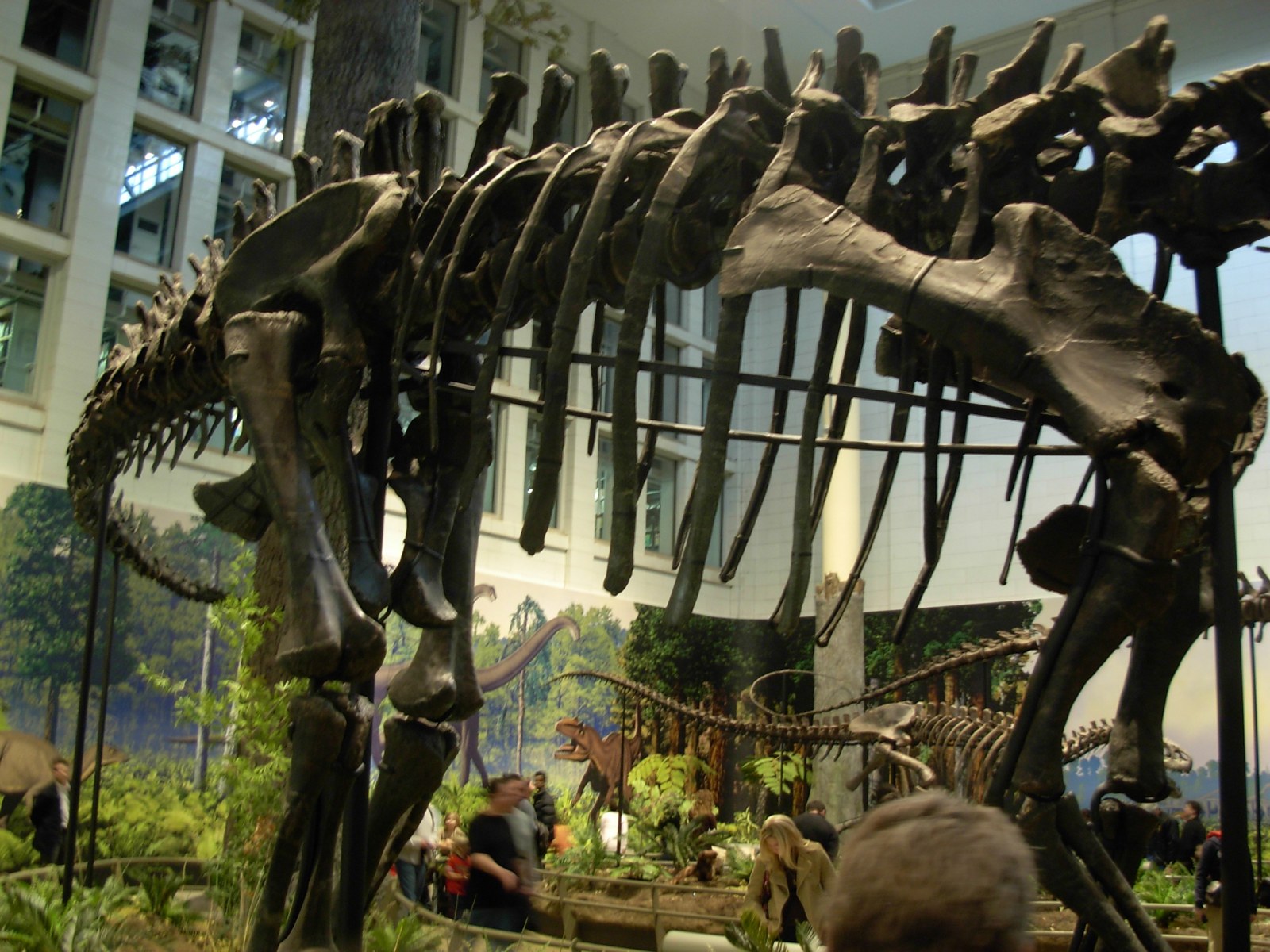
Diplodocus and its relatives had some of the longest tails of any animal. By the count in the most recent study, a diplodocid tail had about 80 vertebrae: around 10 large, complex bones at the base, about 40 intermediate ones, and finally some 30 progressively smaller, rod-like bones tapering to a point. That shape has invited the comparison with a bullwhip for a long time, and a bullwhip cracks because its tip moves faster than sound.
1997: the tip went supersonic
In 1997, Nathan Myhrvold and paleontologist Philip Currie published a computer model of the tail of Apatosaurus louisae, a close relative of Diplodocus. Their abstract reports that the tail could reach supersonic velocities, producing a noise like the crack of a bullwhip, and that the similar tail structure suggests the same was feasible for other diplodocids.
There is a detail that the abstract does not mention. As the 2022 team summarises the 1997 work, the model ended in a hypothetical "popper", a soft-tissue structure that made the tail about a metre longer, like the frayed tip of a real bullwhip. The tail tip, and in particular the popper, went faster than sound. No fossil preserves anything like it.
2022: about 100 km/h
In 2022, Simone Conti and colleagues rebuilt the same kind of tail as a multibody simulation, with one rigid body for every vertebra, and cross-checked its measurements against five museum specimens. They added the friction of the muscles and joints, plus aerodynamic drag. The tip reached velocities in the order of 30 m/s, or about 100 km/h, which the paper describes as more than ten times slower than the speed of sound.
They also asked what the tissues could survive. Skin fails first, and at the stresses a supersonic tip would impose, the paper concludes that skin, tendons and ligaments would not have held, irrespective of the popper. They tested three hypothetical popper shapes against those stresses, and none would have held up.
Where it stands
The 2022 study is the most recent peer-reviewed treatment of the question that we could find, and we found no published reply to it. It does not settle everything: no complete diplodocid tail has ever been found, so every model is built from overlapping partial skeletons, and the 1997 result came from a model that ended in a structure no fossil has ever shown. For now it is model against model, and the newest one says no. Browse the real fossil record in the Fossil-DEX, and see where every fact comes from.
Sources
- Myhrvold, N.P. & Currie, P.J. (1997). Supersonic sauropods? Tail dynamics in the diplodocids. Paleobiology 23(4): 393–409. doi:10.1017/S0094837300019801
- Conti, S., Tschopp, E., Mateus, O., Zanoni, A., Masarati, P. & Sala, G. (2022). Multibody analysis and soft tissue strength refute supersonic dinosaur tail. Scientific Reports 12: 19245. doi:10.1038/s41598-022-21633-2
A tail built like a whip.
PaleoDex catalogues the real fossil record, and every fact in it is sourced. Get the app.
GET IT ON GOOGLE PLAY →