The Oxygen Myth: Why Dinosaurs Really Got So Big
PALEODEX · 28 July 2026 · 6 min read
Ask anyone why dinosaurs got so big and you'll hear the same answer: more oxygen in the air. A geologist actually went and measured it. He found the opposite — and the real explanation is stranger than a thicker atmosphere.
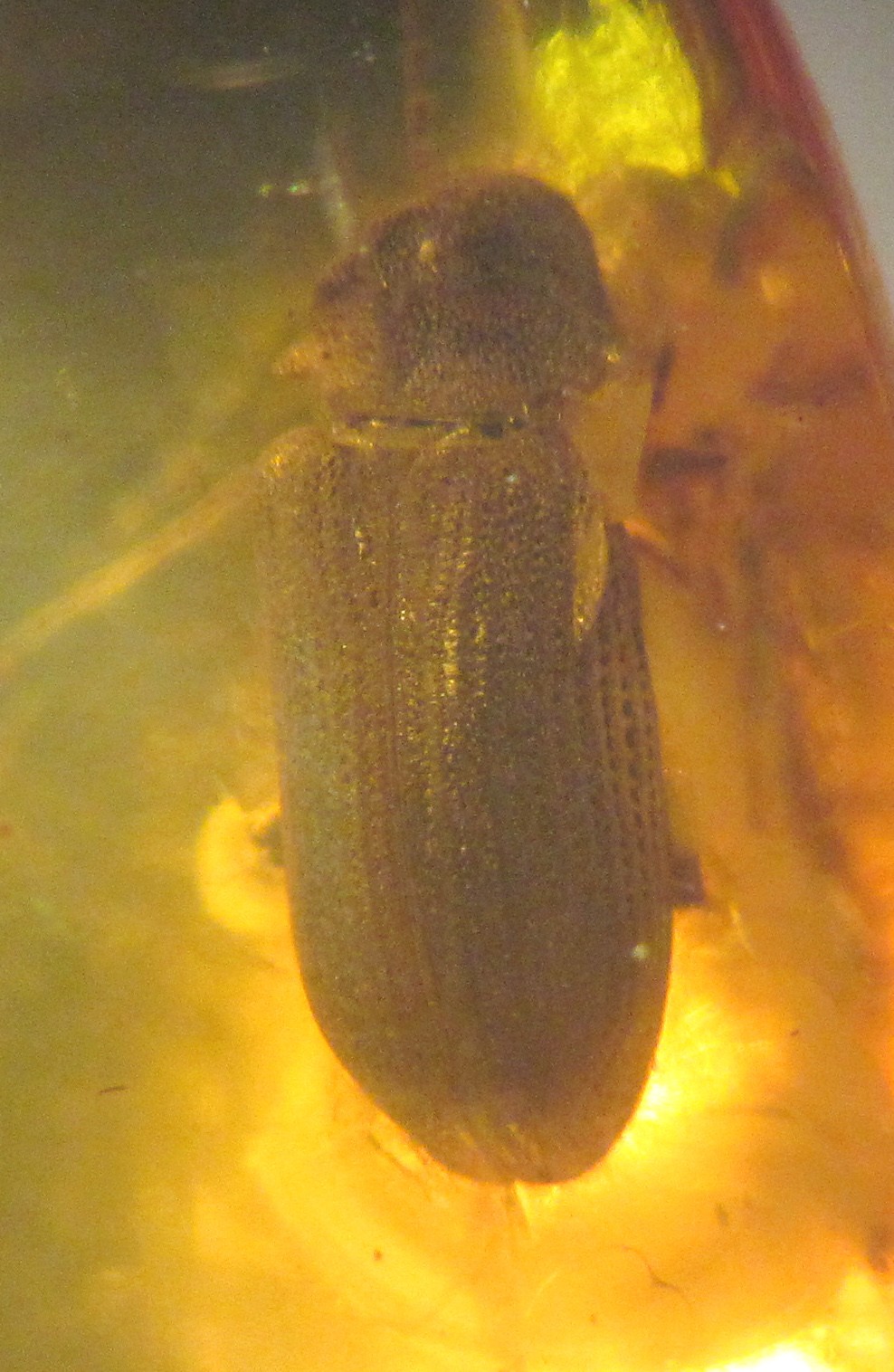
It's the default explanation, repeated in documentaries and classrooms: the air used to be thicker, so dinosaurs could grow bigger lungs, bigger bodies. It sounds tidy. It is also the explanation the evidence does not support — and it is wrong in two separate, stackable ways.
The actual measurement
In 2013, a geologist named Ralf Tappert decided to stop repeating the assumption and measure it. His team read stable carbon isotopes locked inside amber — fossilized tree resin, chemically stable across geological time — spanning more than 220 million years. The reconstruction: atmospheric oxygen sat at roughly 10–15% for most of that span. That's below the 21% we breathe today, not above it. In Tappert's own words: "the gigantism of dinosaurs cannot be explained by those theories."
The second mistake, hiding inside the first
Here's what makes the myth so sticky: the oxygen spike everyone actually pictures is real. It just belongs to the wrong era. A late-Paleozoic peak, commonly cited near 30%, is well supported — but it's the Permian and Carboniferous, the age of dragonflies the size of seagulls, tens of millions of years before the first sauropod ever existed. Two separate errors, stacked into one confident wrong answer: the wrong number, applied to the wrong time.
Architecture, not atmosphere
So what actually explains sauropod size? The mechanism is structural, not environmental. Sauropod vertebrae are riddled with laminae, fossae and internal chambers — the osteological signature of an avian-style respiratory system, air sacs and pneumatic diverticula threaded straight through the skeleton, the same basic architecture birds use today. That system did three things at once: it lowered the cost of every breath, reduced the animal's overall mass, and likely helped shed excess body heat. Not one winning trick — three consequences of a single design, and no study ranks them against each other.
Not just lighter bones — a longer reach
This is the part that usually gets flattened into "hollow bones made them light," which is the folk-simplified half-answer. The full claim is bigger: that same air-sac system is what made the sauropod neck possible in the first place, by cutting respiratory dead space and lightening a structure that would otherwise be too heavy to hold aloft. And the neck wasn't a side effect — sauropod biology researchers rank it as probably the single most important innovation in the whole gigantism package, because it gave these animals a feeding envelope no other large herbivore could reach. Sauropods didn't just get big. They reached further than everything else alive.
Sources
Every number above traces to a named paper — read them yourself.
- Tappert, R., McKellar, R.C., Wolfe, A.P., Tappert, M.C., Ortega-Blanco, J. & Muehlenbachs, K. (2013), "Stable carbon isotopes of C3 plant resins and ambers record changes in atmospheric oxygen since the Triassic," Geochimica et Cosmochimica Acta 121:240–262
- Wedel, M.J. (2003), "Vertebral pneumaticity, air sacs, and the physiology of sauropod dinosaurs," Paleobiology 29(2):243–255
- Sander, P.M. et al. (2011), "Biology of the sauropod dinosaurs: the evolution of gigantism," Biological Reviews 86:117–155
- Krause, A.J. et al. (2023), "Evolution of Atmospheric O2 Through the Phanerozoic, Revisited," Annual Review of Earth and Planetary Sciences
The real record, in your pocket.
PaleoDex catalogues the real fossil record, and every fact in it is sourced. Get the app.
GET IT ON GOOGLE PLAY →