The Two-Headed Reptile of the Cretaceous
PALEODEX · 14 July 2026 · 6 min read
A baby reptile fossilized 120 million years ago with two skulls, two necks, and one tiny body. It is not a hoax, and it is not two fossils stuck together — it is the oldest two-headed animal ever found, and the same glitch that made it still happens today.
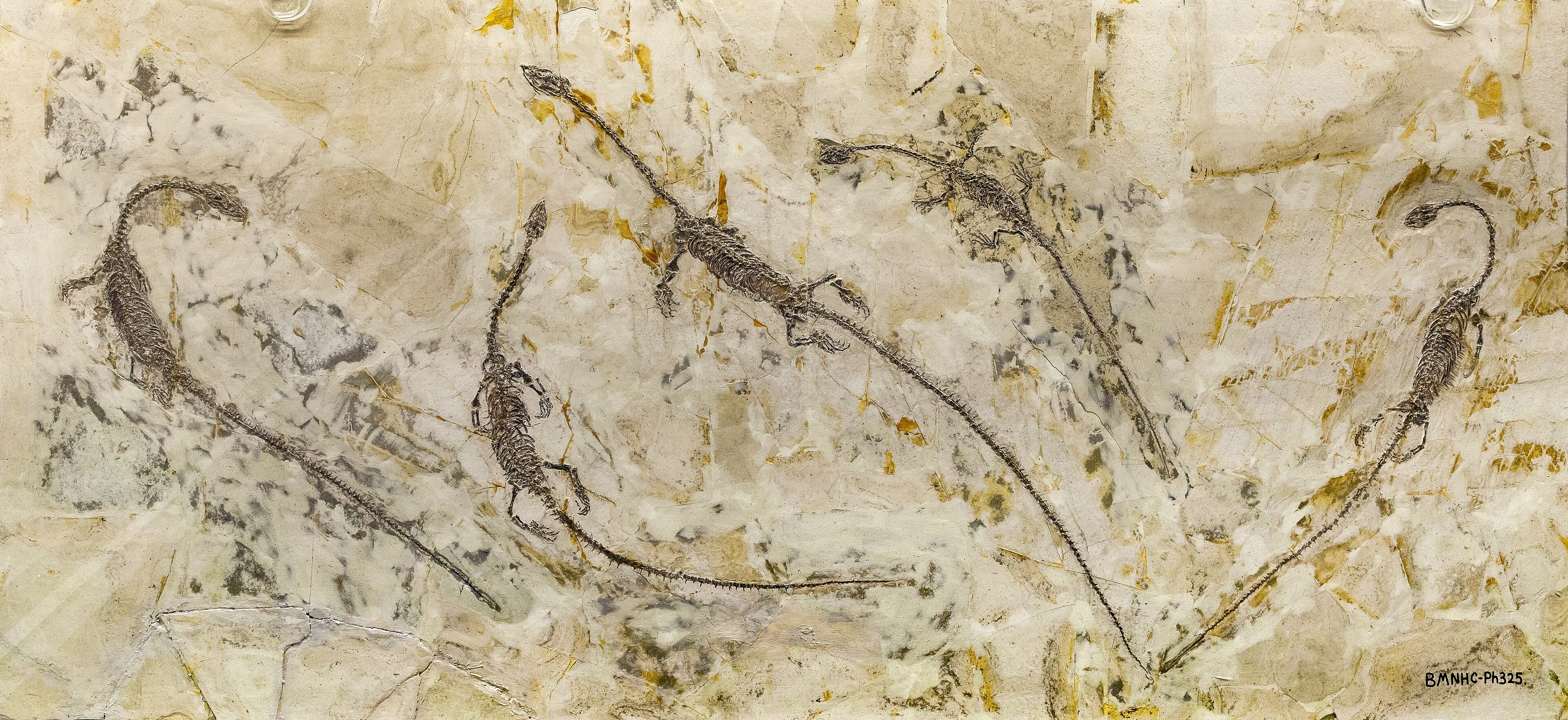
Some fossils are strange because of how big they are, or how old. This one is strange because it has two heads. Discovered in the Early Cretaceous lake beds of northeastern China, it is a tiny reptile embryo or hatchling with two complete skulls, two full necks, and a single small body. It is real, it is peer-reviewed, and it is roughly 120 million years old: the earliest known example of its condition in the entire fossil record.
What the fossil actually shows
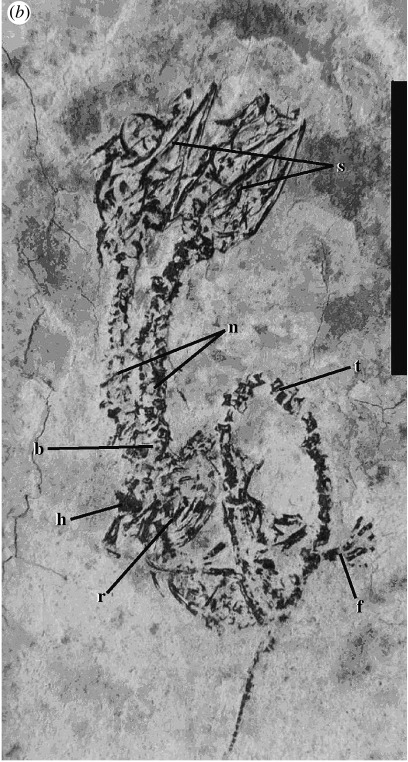
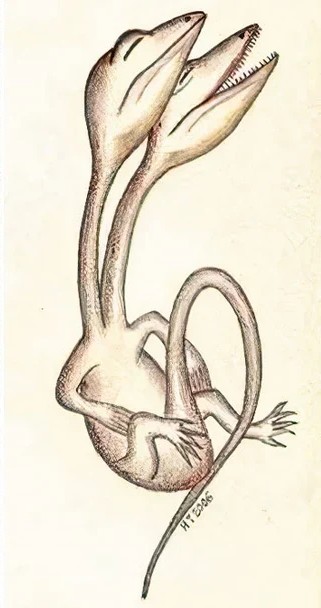
The whole animal is about seven centimetres long, the size of your finger. Its spine runs normally through the body, then splits at the shoulders into two separate necks, and each neck ends in its own fully formed skull. This is not a specimen with a badly preserved head, or two animals crushed together on the same slab. It is one body with two heads, and both heads are complete.
It is not a dinosaur
Online, the specimen usually gets called a "two-headed dinosaur." It is not one. The animal is Hyphalosaurus, a member of an extinct group of aquatic reptiles called choristoderes: long-bodied, long-necked freshwater swimmers that lived alongside the dinosaurs but were not dinosaurs themselves. Hyphalosaurus is one of the most abundant vertebrates in the Jehol Biota of Liaoning, China, dating to roughly 122 million years ago. You can see where China sat on the Cretaceous globe on our Continental Drift map, and check where every fact on PaleoDex comes from.
How an animal grows two heads
The condition has a name: axial bifurcation. Early in development, a single embryo begins to split into identical twins, the same process that produces ordinary twins in living animals, but the split does not finish. The body reunites into one, while the head end has already divided in two. The result is a single animal with two heads, and it is genuinely well understood: this fossil was described in the peer-reviewed journal Biology Letters in 2007, and the authors identified it as the oldest known record of axial bifurcation in the fossil record.
The same glitch still happens today
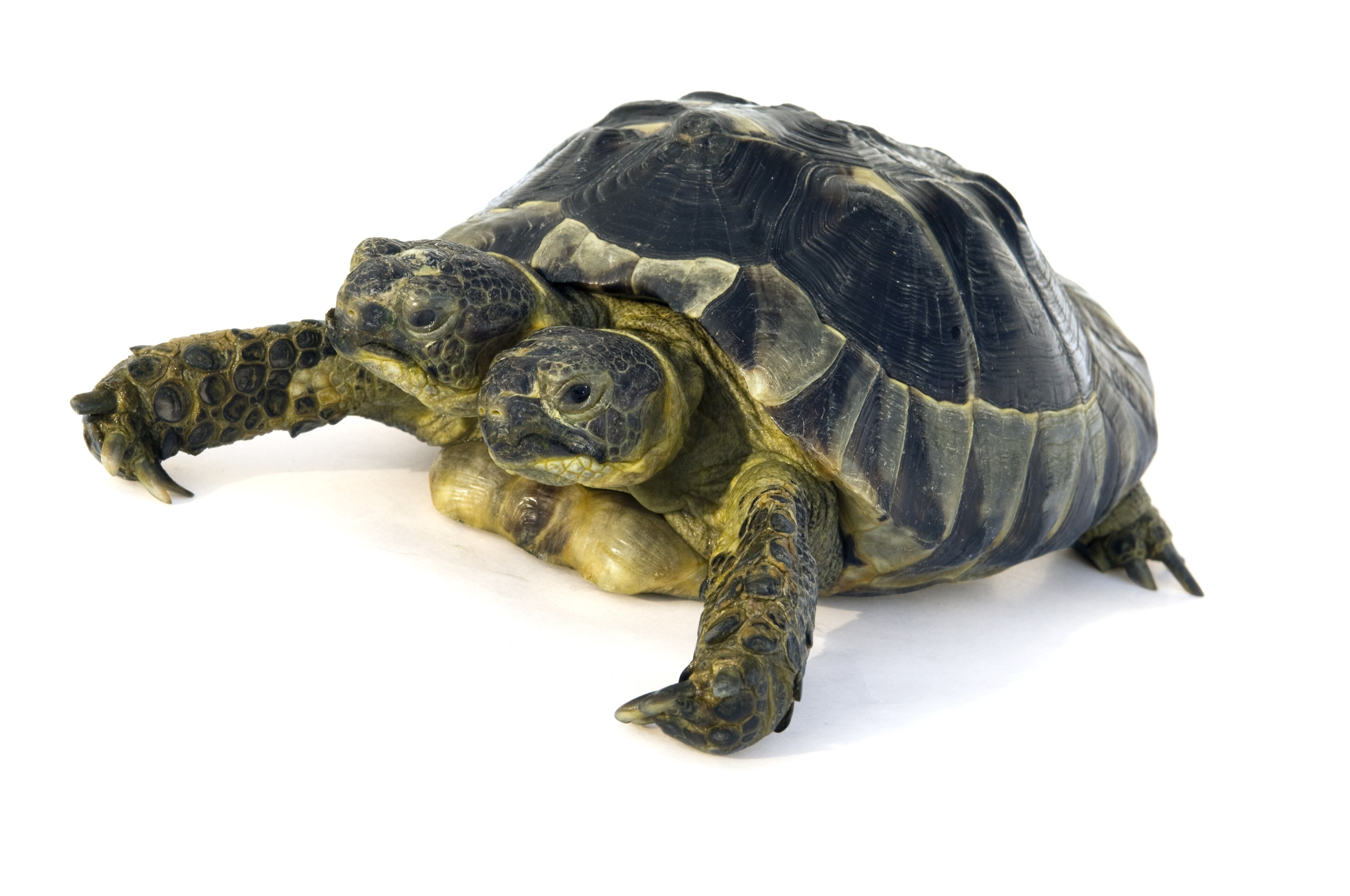
What makes the fossil so uncanny is that this is not an extinct problem. Two-headed snakes and turtles still hatch today. Polycephaly turns up in reptiles roughly once in every 100,000 births, and most do not survive long in the wild: two heads mean two brains arguing over one body, slower movement, and clumsy feeding. But in captivity some live for decades. A two-headed tortoise named Janus, cared for at the Natural History Museum of Geneva, has lived more than 22 years. The 120-million-year-old fossil simply proves the accident is very, very old.
Why it survived 120 million years
A newborn animal with two heads is fragile, and most would vanish without a trace. This one made it into the record because of where it died. The lakes of the Jehol Biota, in the Yixian Formation, were periodically blanketed by fine volcanic ash and had oxygen-poor bottom waters, conditions that bury small animals quickly and completely, preserving them in exquisite detail. It is the same setting that gave us feathered dinosaurs and early birds like Confuciusornis. Without a lagerstätte like Jehol, a soft, seven-centimetre hatchling would never have become a fossil at all.
Why this belongs in PaleoDex
The two-headed reptile is a perfect PaleoDex story: not a myth, not a viral fake, but a real specimen with a paper attached, and a straight line from a 120-million-year-old lakebed to the two-headed tortoise living in a museum today. That is the whole idea: the real record, with the receipts. Explore the creatures that shared its world in the Fossil Library, trace the map on Continental Drift, and read more oddities from the record.
Sources
Every fact above is drawn from the primary description and standard references:
- Buffetaut, E., Li, J., Tong, H., & Zhang, H. (2007). "A two-headed reptile from the Cretaceous of China." Biology Letters 3(1): 80–81. The peer-reviewed description of the specimen and its identification as the oldest known axial bifurcation. (PMC2373827)
- Wikipedia, "Hyphalosaurus": the genus, its choristoderan classification, and its place in the Jehol Biota.
- Wikipedia, "Polycephaly": two-headedness in living reptiles, its frequency, and the tortoise Janus.
The real record, in your pocket.
PaleoDex catalogues the real fossil record, and every fact in it is sourced. Get the app.
GET IT ON GOOGLE PLAY →