Paleoflora: The Forests That Fed the Giants
PALEODEX · 28 June 2026 · 6 min read
Every dinosaur stood in a landscape — and that landscape is a fossil too. Welcome to the most overlooked science in paleontology.
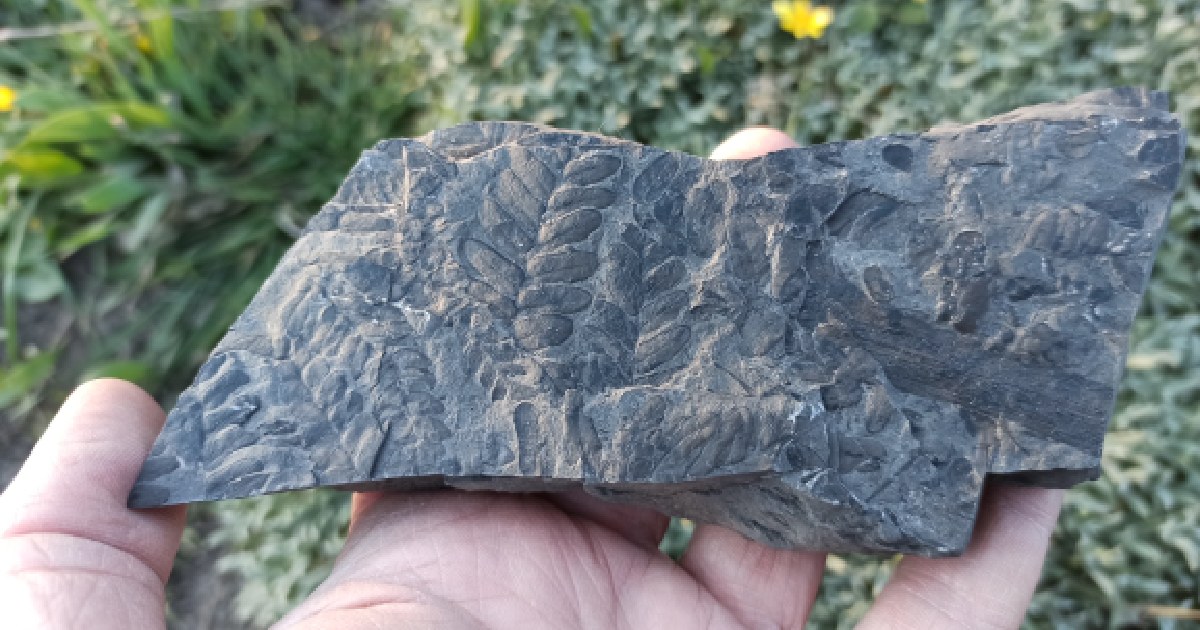
We obsess over the animals and forget the world they stood in. But that world — the trees, ferns and flowers — is a fossil too, and the science that reads it, paleobotany, is one of the most underrated fields there is. Ancient plants didn't just set the scene. They made the land livable, built the coal we still burn, fed the giants, and even helped prove that continents move.
Plants made the world livable
Before there were forests, the land was bare rock and sand. Plants colonized it starting around 470 million years ago, and by the Devonian the first true forests had appeared. They created soil, pulled carbon from the air, pumped out oxygen, and built the food web every land animal would later depend on. No paleoflora, no dinosaurs — no us.
The coal you burn is a fossil forest
The Carboniferous Period is named for coal, and for good reason. Its swampy forests were dominated by giant relatives of today's tiny club mosses — scale-trees like Lepidodendron, which reached up to 50 metres (160 ft) tall with trunks over a metre wide. So much plant matter piled up and was buried that it became the great coal seams we mine today. Those same oxygen-rich forests are why the Carboniferous had dragonflies the size of hawks. (It's also the world PaleoDex's Coal Forest biome is built on.)
A fern that proved the continents move
Here's the one that gives me chills. Glossopteris was a seed fern that blanketed the southern continents in the Permian. Its fossils turn up across South America, Africa, India, Australia — and Antarctica. That distribution made no sense unless those lands had once been joined. Alfred Wegener used exactly this evidence to argue for continental drift and the lost supercontinent of Gondwana. A plant helped rewrite the map of the Earth.
Darwin's "abominable mystery"
Flowering plants — angiosperms — appear and explode across the fossil record in the mid-Cretaceous, seemingly out of nowhere. Charles Darwin found their sudden rise so hard to square with slow, gradual evolution that he called it his "abominable mystery." More than a century later, scientists are still untangling exactly how flowers conquered the planet so fast. (And as we saw with fossil poop, even grasses showed up later than anyone expected.)
Living fossils: the Wollemi pine
Some paleoflora isn't extinct at all. The Wollemia nobilis, or Wollemi pine, was known only from ~90-million-year-old fossils and assumed long gone — until 1994, when a park ranger found a stand of fewer than a hundred living trees in a canyon near Sydney. A Cretaceous tree, hiding in plain sight, into the present day.
Why plants belong in PaleoDex
Ancient flora is one of the seven groups in the catalogue for a reason: it's half the story. The giants we love were shaped by what they ate and the worlds they moved through — and those plants are real, documented fossils too. Browse the catalogue in the Fossil Library, watch the forests shift across eras on the Continental Drift map, and see where every fact comes from. The actors get the spotlight; the stage is a fossil too.
Sources
The overlooked half of paleontology — sources below.
- Glossopteris & continental drift — Encyclopædia Britannica
- Lepidodendron (Carboniferous coal forests) — Wikipedia
- Darwin's 'abominable mystery' (flowering plants) — ScienceDaily
- Wollemi pine, a living fossil — Britannica
The whole world, not just the giants.
PaleoDex catalogues ancient plants alongside the animals — the real record, in full. Get the app.
GET IT ON GOOGLE PLAY →