Jurassic Park vs the Fossil Record
PALEODEX · 28 June 2026 · 6 min read
We love it too. But three decades on, the science has moved — here's what it got wrong, what it got right, and the one invention we can't stand.
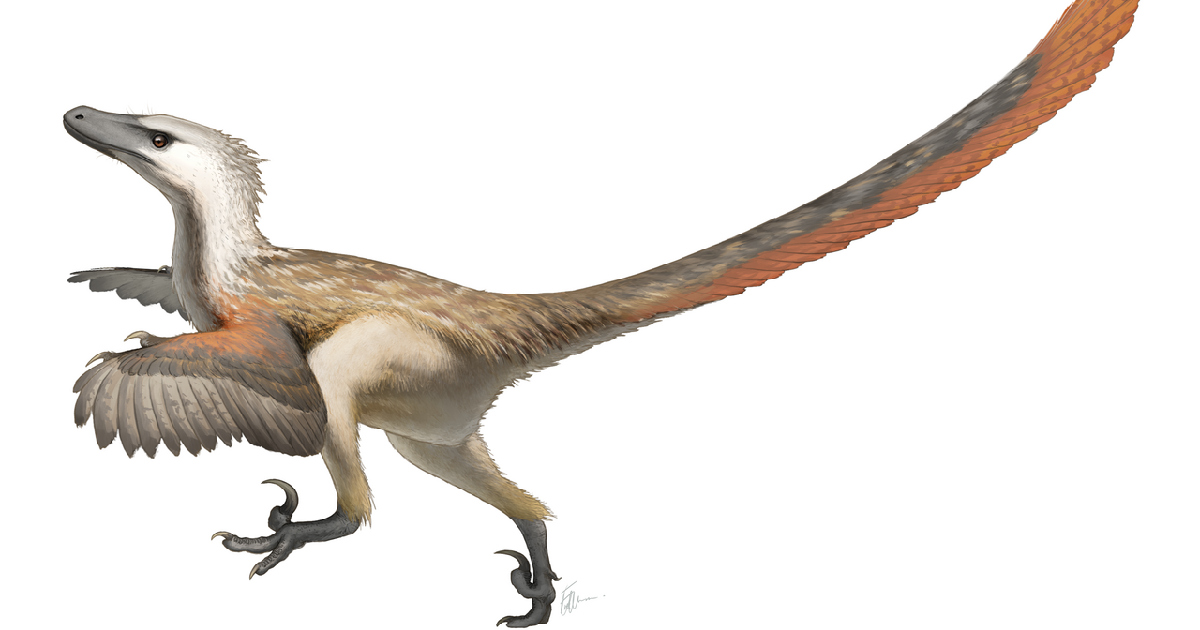
No film shaped how the planet pictures dinosaurs more than Jurassic Park (1993). It's a masterpiece — and, by now, decades out of date. This is a friendly autopsy, not a takedown: here's where the movies drift from the fossil record, where they nailed it, and one thing that still gets under our skin.
What it got wrong
The raptors should have had feathers
On screen: scaly, reptilian killers. In the record: Velociraptor and its dromaeosaur relatives were feathered — we've since found quill knobs on Velociraptor's forearm, the anchor points for wing feathers. The film's dinosaurs are scaly because that's how 1993 pictured them (and how audiences still expect them to look).
...and they were turkey-sized
On screen: two-metre-tall pack hunters. In the record: real Velociraptor mongoliensis stood roughly knee-high — about two feet tall and six feet long including the tail, closer to a large turkey than a person. The movie "raptors" were sized up, much closer to their bigger cousin Deinonychus (and the even larger Utahraptor, described right as the first film came out).
Dilophosaurus had no frill and no venom
On screen: a small dinosaur that flares a neck frill and spits blinding venom. In the record: pure invention. The real Dilophosaurus had neither — and it was far bigger, around 6 metres (20 ft) long. The frill and venom were added for the story.
T. rex did not have movement-based vision
On screen: stand still and the T. rex can't see you. In the record: a plot device (the films even blame it on spliced amphibian DNA). Tyrannosaurus had forward-facing eyes and excellent binocular vision — by some estimates several times sharper than ours. Holding still would not have helped.
The whole premise can't work
On screen: dino DNA recovered from a mosquito in amber. In the record: DNA decays. Its chemical bonds have a half-life of about 521 years, and even in ideal conditions the molecule becomes unreadable after roughly 1.5 million years. Non-avian dinosaurs died out 66 million years ago — about forty times past that limit. Amber doesn't pause the chemistry. There is no dino DNA to find.
What it got right
Plenty, and it matters. Jurassic Park put forward dinosaurs as fast, active, intelligent, bird-like animals at a time when many people still pictured sluggish swamp-lizards — riding the "Dinosaur Renaissance" sparked by animals like Deinonychus. It made a generation take dinosaurs seriously as living creatures. A lot of working paleontologists will tell you that film is why they're in the field at all.
The point isn't that the movie is bad
It's that the real fossil record is even better — feathered raptors, a sharp-eyed tyrant, a 6-metre crested hunter — and it keeps getting better as we learn more. You can meet the genuine versions in our Fossil Library, travel their world on the Continental Drift map, and see exactly where every fact comes from on our About the Data page. No frills. No venom. No hybrids.
Sources
A myth-buster has to be accurate itself — sources below.
- Debunking dinosaur myths — Natural History Museum
- DNA has a 521-year half-life — Scientific American
- T. rex vision wasn't movement-based — IFLScience
Meet the real ones.
Feathered, sharp-eyed, and 100% real. Get the app and explore the actual fossil record.
GET IT ON GOOGLE PLAY →