Are Birds Dinosaurs? The Clade Answer
PALEODEX · 5 August 2026 · 7 min read
One of the most-argued questions on the internet — and it is not actually open.
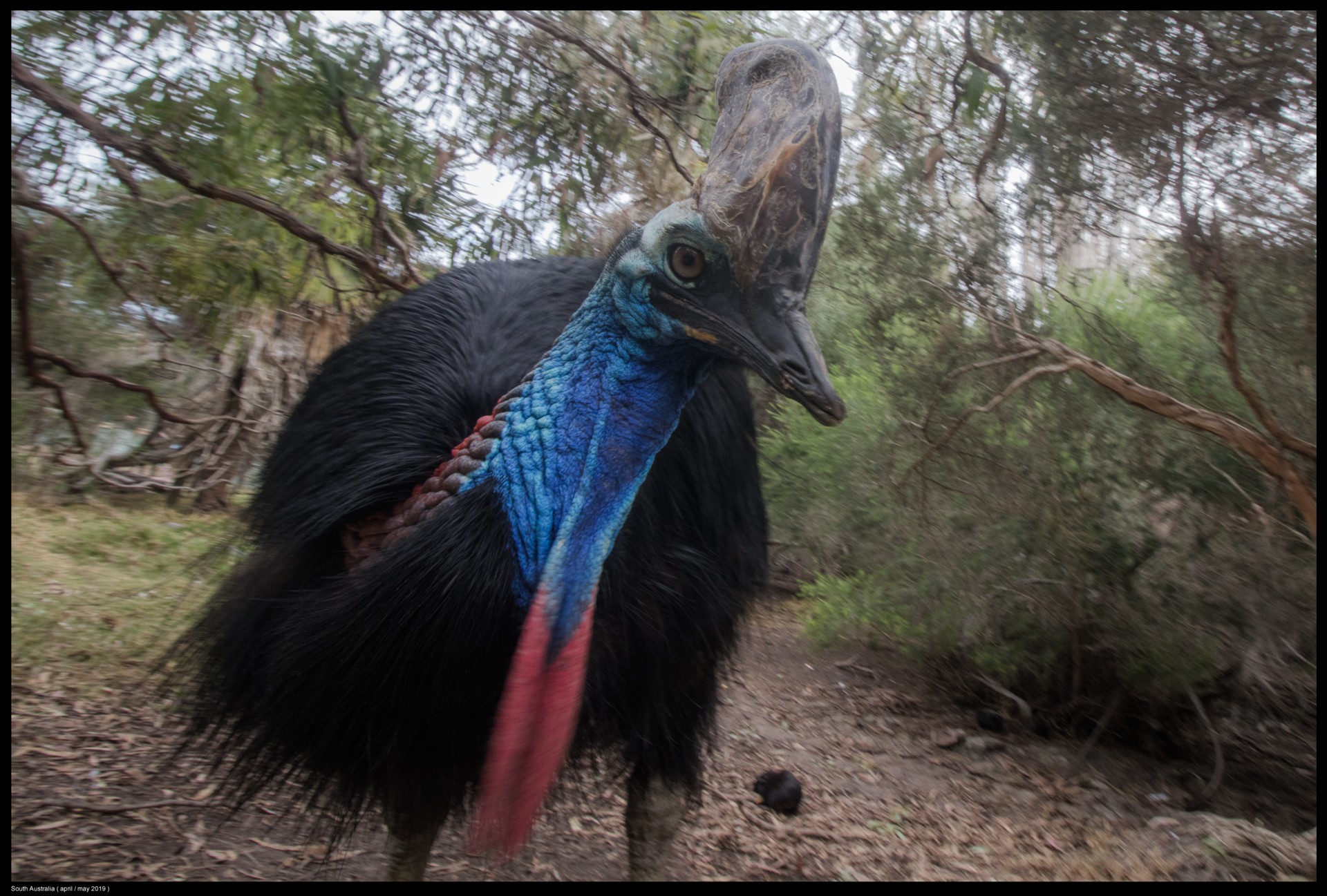
Search "are birds dinosaurs" and you will find people arguing about it. That argument is not happening inside paleontology. Birds being theropod dinosaurs is consensus, and it has been for decades. What makes the question interesting is not whether the answer is yes — it is why the usual way of asking it is slightly the wrong shape.
The wishbone is not a bird invention
Start with the wishbone, the one you pull apart at dinner. It has a name — the furcula — and it is two collarbones fused down the middle. A 2009 review in the Journal of Morphology describes it as the element that is unique to theropods, notes that it appears very early in theropod history, and reports that furculae occur in nearly all the major clades of theropods. Tyrannosaurus rex had one; a dedicated 2007 paper describes it.
That is the shape of the whole argument in miniature. The bone did not arrive with birds. Birds inherited it.
Feathers came before birds, and before flight
Sinosauropteryx was a small hunting dinosaur from north eastern China, described in Nature in 1998. It was not a bird. It could not fly. And it is covered in fine filaments. A 2025 review of feather origins in Biology Letters puts the general case flatly: feathers clearly appeared prior to the origin of either birds or flight, and must have had a deeper, dinosaurian ancestry.
Nobody had to add feathers to make a bird. They were already there.
A dinosaur sitting on its nest
It goes past the skeleton and into behaviour. An oviraptorid was preserved lying over a clutch of oviraptorid eggs — limbs folded symmetrically beneath it, arms spread around the perimeter of the nest. The 1999 monograph describing it is careful about what that means: the posture is the same as one commonly taken only by birds among tetrapods that brood their nest.
Worth keeping the authors' own limit in view. A brooding posture is not proof the animal was warming the eggs the way a modern bird does. What it shows is that the behaviour of sitting on an open nest in that position is older than modern birds.
Tissue only a female bird builds
The strangest line of evidence is chemical. Inside the hindlimb of Tyrannosaurus rex specimen MOR 1125, researchers found endosteally derived tissue they hypothesised is homologous to medullary bone — the temporary calcium store a female bird lays down while she is producing eggs. It is otherwise unique to female birds. Their 2005 paper in Science states the consequence directly: its discovery in extinct dinosaurs solidifies the link between dinosaurs and birds.
So where exactly is the line?
There isn't one, and that is the actual finding rather than a rhetorical flourish. When you measure whole skeletons across the transition, birds come out indistinguishable from their closest relatives in morphospace — no great jump between non-birds and birds. The classic avian body plan was, in the words of a 2015 review, pieced together gradually over tens of millions of years of evolution rather than in one burst of innovation.
Every candidate boundary you might draw — feathers, the wishbone, brooding, egg-laying physiology — turns out to sit somewhere inside the dinosaur half of the picture.
You cannot leave a clade
Here is why "birds descended from dinosaurs" is not so much wrong as badly shaped. Dinosaur is a clade: a branch of the tree defined by common ancestry. Membership is not a checklist of traits you can grow out of, it is a position on a family tree. And nothing evolves out of its own ancestry.
A bird can no more stop being a dinosaur than you can stop being an ape. "Descended from" implies leaving. Nothing left. Birds are the branch of the group that is still here.
About 11,000 species, still here
The IOC World Bird List v15.2, released in April 2026, recognises 11,227 bird species, 164 of them extinct — so roughly 11,063 living species. Every one of them is a dinosaur. Not a descendant of one. Not a relative of one.
You can browse the extinct half of that record in the Fossil Library, watch the continents move under it on the Continental Drift map, and see where every fact comes from. And then look out of the window. You almost certainly saw a dinosaur today.
Sources
Every claim above traces to a primary source — listed below.
- Nesbitt et al. 2009 — "The theropod furcula", Journal of Morphology 270:856–879
- Lipkin, Sereno & Horner 2007 — the furcula in Tyrannosaurus rex, Journal of Paleontology 81:1523–1527
- Chen, Dong & Zhen 1998 — Sinosauropteryx, Nature 391:147–152
- Xu & Barrett 2025 — the origin and early evolution of feathers, Biology Letters
- Clark, Norell & Chiappe 1999 — oviraptorid in brooding position, AMNH Novitates 3265
- Schweitzer, Wittmeyer & Horner 2005 — medullary bone in Tyrannosaurus rex, Science 308:1456–1460
- Brusatte, Lloyd, Wang & Norell 2014 — gradual assembly of the avian body plan, Current Biology 24:2386–2392
- Brusatte, O'Connor & Jarvis 2015 — the origin and diversification of birds, Current Biology 25:R888–R898
- Xu et al. 2014 — an integrative approach to understanding bird origins, Science 346:1253293
- Renne et al. 2013 — timing of the Cretaceous–Paleogene boundary, Science 339:684–687
- IOC World Bird List v15.2 (April 2026)
The real record, in your pocket.
PaleoDex catalogues the real fossil record, and every fact in it is sourced. Get the app.
GET IT ON GOOGLE PLAY →